I waited almost a little too long to interview Michael Lumpkin, Frameline's former Executive Director, before his unexpected retirement. I told myself not to hazard the same mistake twice and to make a more concerted effort to get to know and interact with his successor K.C. Price and, further, to become more involved with Frameline's championing presence in the Bay Area. I dropped the ball last year on meeting up with Price but rallied this year. My thanks to K.C. for so graciously considering my 35mm complaints even as he invited me into Frameline's office at the Ninth Street Film Center for a conversation. He carries on Frameline's ongoing tradition of being responsive to its constituency. A tall, affable and well-spoken gentleman, I sensed our conversation would be the first of many in years to come.
* * *
 Michael Guillén: K.C., I was Googling you last night to see who the heck you were and I kept getting all these hits on this Black evangelist fleecing his flocks....
K.C. Price: Frederick K.C. Price!
Guillén: That's right. But I found very little on you and so would like to start out this morning by securing a little background information for a brief profile. You've clearly been around for a while?
Price: Yes, I've been working for Frameline directly or indirectly for 11 years now.
Guillén: Were you originally on their board?
 Price: No. Michael Lumpkin hired me in 1999. I came on then and worked for four years as their Development Director. Frameline, CAAM, and the San Francisco Jewish Film Festival co-own the Ninth Street Film Center and—when Frameline moved into the building—we enhanced that partnership. All of a sudden the Center became its own non-profit so I moved from the Frameline position and became the Managing Director of Ninth Street. I did that for five years. I was still basically working closely with Michael and Frameline through those years. When Michael left, I applied for the Executive Director position and that's how I came back into the office directly.
Guillén: What are your duties as Frameline's Executive Director?
Price: The Executive Director in a non-profit typically oversees all the departments. Normally, you'll have a program department, an administration and finance department, and a development / fund raising department. I manage all three of those larger areas and am ultimately responsible for the organization. I'm the one who reports directly to the Board of Directors.
Guillén: So you've been in this position two festival years now? How are you settling in? Have you been enjoying yourself?
 Price: Absolutely! I feel lucky to have this job. No doubt about it. Of course, anybody working in the non-profit sector with the economy right now has been facing financial challenges—especially at the end of 2008 when all this started—but, we have weathered all that very well and things are going great. No, I couldn't love this job any more. Being in this role last year during my first festival—especially following in Michael's footsteps—felt pretty terrifying sometimes; but, at this point, going into my second year, it feels so much more comfortable to me.
Guillén: Are you from San Francisco?
Price: No, I've lived here for 15 years. I'm from North Carolina.
Guillén: Is that where you were educated?
Price: I went to undergraduate school in North Carolina and then went to graduate school in Washington, D.C. for a number of years. Then I lived abroad for about 2½ years.
 Guillén: With regard to this year's edition of Frameline, I'd like to focus on the two sidebars I'm most anticipating—the focus on South American queer cinema and the mini-retrospective of the queer shorts of Andy Warhol—and the festival's overriding attention to history. As you went to organize the festival, did these themes present themselves in the submissions received or did you sift through the submissions in search of works to fit chosen themes?
Price: That's an excellent question. I would probably say it's a little bit more of the former but there is a little bit of the latter to help bring it all together. For one thing, in terms of the films that we're looking at that are being screened at the larger film festivals—Toronto, Sundance, Berlin—we'll be able to see the brightest gems in LGBT cinema that are out there. On top of that we have about 500-600 submissions during Frameline's submission process; a lot of shorts but a large number of narrative features and documentaries too. So you will start to see some themes that are gelling out there in the zeitgeist in terms of what filmmakers are making.
I noticed last year that in a lot of the films that were coming in—and, of course, we were going for the high-end artistic quality films—there seemed to be a lot darker themes and more violence in the films last year. I remember some audience members mentioning that to me and all I could respond was, "That's what the filmmakers are making right now." I don't know if that was a consequence of the administration....
Guillén: Let's blame them for bumming us out.
Price: [Laughs.] Or maybe it was the war in Iraq?—I don't know—but, it was interesting to see that. Whereas this year—in terms of finding a theme—the whole South American program was definitely what was happening, which was really interesting. Back in December-January, people were asking, "What are you seeing?" and it was all these films from South America. When we drew close to the programming decisions in March, it was an easy thing to do. It wasn't just that there were a large number of films from South America, it was that there were at least 10 really great films from South America.
Guillén: Latin American cinema is primarily what I cover so it's always great when there's a respectable LGBT sampling and this year is just fantastic. As I was researching Frameline's selection, it was heartening to see these films popping up in other queer film festivals in the U.S. and Canada, most recently Toronto's Inside Out, which just wrapped a few weeks ago. How much does Frameline coordinate with other queer festivals to bring these films to North American audiences? Does it help to acquire the films since they're already on the festival circuit? Does their availability influence your programming decisions? Do you interact with these other LGBT festivals?
 Price: We do interact with them—not necessarily to make the programming decisions—but, we have a lot of close relationships with several of the other queer film festivals. We get to know each other at the larger film festivals. They're wonderful people working at the other festivals. We have a great working relationship, for example, with Outfest in Los Angeles. One thing we do get out of knowing the other programmers is that sometimes we can check in with each other for tips or if we're looking for information on a particular film; but, it's not a close network in terms of making mutual programming decisions.
You do have to remember that there is a limited body of work that's being made each year that is high quality LGBT cinema. A natural consequence of that is that you're going to see some of the same films programmed at other festivals as well.
Guillén: In terms of the spectacular dimension of the festival and inviting talent to accompany their works, there's not any coordinated efforts between LGBT festivals to finance travel costs for—let's say—bringing in directors from Argentina, Brazil or Peru to attend their screenings? I imagine the complication there would be the calendaring?
Price: You've described what the issue would be. It is mostly about the calendar. As I mentioned to you, one of the things I learned from working for the consortium at the Ninth Street Film Center is that it's not always easy to collaborate. Collaboration is beautiful and it's wonderful when it works; but, it's also a tremendous amount of work.
Guillén: It looks good on paper?
Price: [Laughs.] Yes, it looks good on paper. It sounds really great when you're describing it but then there's the whole level of actually doing the work, which can sometimes be very challenging. When you can make it work, though, it's really exceptional in the non-profit world. As you say, if you can combine resources to finance travel, that's great; however—though there are some queer festivals close by to our's—sometimes they're just not close enough to make the travel work. For example, as I said, we have a great relationship with Outfest in Los Angeles and would love to partner more on travel with them because they're situated not too far after our own festival, maybe a week or so after Frameline; but, it's always almost impossible to split costs because, no, talent can't hang around for two and a half weeks inbetween festivals.
Guillén: Does Frameline receive much consular assistance for some of the films you're bringing in from other countries?
Price: Yes. We have a number of partners that help us in different years. For example, in the two years I've been here, last year we had generous support from the Swiss consulate and some from Sweden, I believe. This year, the Israeli and Norwegian consulates are supporting us.
Guillén: Being that you have such a strong South American sidebar, are you receiving any consular support from the South American countries?
Price: No, we're not. Usually we can make the consular support happen when we already have a working relationship. Sometimes it just doesn't work because—by the time we confirm that a guest is coming in and the amount of work it takes to get the consulate's support—it doesn't work for the timeline. It always sounds really good, but—when you get to it and try to make it all happen—the timing doesn't work unless there's already an established relationship. One of our longest supporters was the Canadian consulate; but, we haven't been receiving support from them in the last couple of years. I don't know if that's due to a change in government or if there have been budget cuts.
Guillén: So let me be clear, when you're saying "support" do you mean financial support? Or administrative support?
Price: Most of the time, it's usually financial support to bring in filmmakers. That's what we use it for.
Guillén: And—since, as you know, I have a vested interest in waning 35mm culture—do the consulates help out at all with print trafficking costs?
Price: Sometimes we'll ask if they can help with print trafficking costs; but, mainly we ask for support to bring in a director.
Guillén: Can you speak to Frameline's collaborations with Bay Area community organizations? Are there any new organizations that you're particularly proud to be working with this year?
 Price: We have two different types of sponsorship support. We have corporate sponsorship where companies, businesses and sometimes non-profits donate either corporate financial gifts or in-kind gifts. The other part of it is the co-presentations where we work with different community organizations—this year I think we have more than 60 different community groups, mainly all non-profit organizations—and they help us get out the word about Frameline and the festival and we get to talk about them at the screenings as well as provide tickets to their constituents so they can attend the festival. Servicemembers Legal Defense Network is one of our relatively new co-presenters that we're excited about this year. They're co-presenting two wonderful films related to Don't Ask Don't Tell: A Marine Story (2010) and Out of Annapolis (2010).
Guillén: Taking the South American sidebar as an example, do you reach out to the Latino community?
Price: Sure, absolutely.
Guillén: Do these Latino community organizations meld with the queer community?
Price: Oh sure. We work with particular partners [Amor Sin Fronteras, El/La Program Para Trans-Latinas, Queer Latina/o Artists Collective, Somos Familia] that serve the Latino community in terms of getting the word out about this special program that we have in the festival so that the constituents they serve are aware that these films coming from South America are available. Then we give free tickets to them as well.
Guillén: I note this year that Lucho Ramirez, who I believe is affiliated with Cine+Mas, wrote up your program essay on the South American sidebar.
Price: Our Community Engagement and Communications Coordinator Harris Kornstein is amazing and has done a great job with the co-presenters this year. I'd say more than half of our programs have a co-presenter associated with them and, typically, in the introduction before the film starts we acknowledge the co-presenter; but, unfortunately, we can't get into much detail in the introduction because it will just bog things down. We're wondering if there are other ways that we can talk about co-presentation so that our community understands how many non-profit groups we work with? One of the wonderful things about the festival is its relationship with the larger community, as represented by the co-presentations.
Guillén: I might suggest profiles of your co-presenters on Frameline's recently-launched blog? That strikes me as the perfect place to get the word out. As you mentioned earlier, the other arm of sponsorship is corporate. This year Yahoo! joins Frameline as one of its premiere corporate sponsors. Talk to me about the value of that association and how it benefits the LGBT community.
Price: Frameline's been fortunate to have a long, successful set of relationships with corporate sponsors for decades now. Some of our sponsors have been with us on and off since the '80s and early '90s. What's fascinating is how these major companies have developed these rich relationships with us, supporting us so generously, which shows how far the community has come in terms of how eager these corporations are to be a part of a film festival that serves the LGBT community. That's exciting. Yahoo! has been a sponsor for four, maybe five, years and this year they went up to one of our two highest levels of sponsorship.
Guillén: As a non-profit with a festival arm, how much support do you receive from the City?
Price: Grants for the Arts is one of our largest funders. I believe about 5% of our budget comes from Grants for the Arts. They're a significant funder to Frameline and have been for a really long time. We couldn't do without Grants for the Arts!
Guillén: Then the remaining bulk of financing comes from memberships and ticket sales?
Price: We have about a $1.6-1.7 million dollar budget to run the organization year-round and the way it breaks down is that for contributed income we have individual donations and membership, which is close to about a third of our support. Our donors and members have been so much of what's made Frameline strong through the years. It's just like the audience itself, which has always been there for us. The foundation also gets government grants, along with the corporate sponsorship that we've talked about, and then we have a set of earned income and the primary one, as you said, is ticket and pass sales. We also have earned income from our distribution department through film rentals and DVD sales.
 Guillén: Speaking of the distribution arm, I'd like to follow-up on a question I asked Michael Lumpkin when we spoke a few years back. I expressed to him how much I admired the "Send It Home" program that Frameline initiated back in the late '80s, I believe, and he told me that the program had been discontinued due to administrative complications. He mentioned, however, that it had morphed into Frameline's "Youth In Motion" program, a carryover of the "Send It Home" initiative. Can you speak to where Frameline stands with its "Youth In Motion" program?
Price: Educational facilities have always been the main, fundamental customer base for Frameline Distribution, which has been around for more than 20 years now. We have about 250 titles. The "Send It Home" program from a number of years ago was a specialized program where people could order films that they could send back to the libraries and colleges of their choice, provided they were accepted. [Laughs.] Once in a while, they weren't. So—though someone might have wanted to send a title home to Nebraska—we had to check to see if they even wanted it.
The "Youth In Motion" program that Michael talked to you about has been in effect for almost two years now. The concept for the program was based on "Send It Home", but basically what we did was we made four DVDs that each covered a separate theme, such as gender identity, LGBT marriage, there's one on the Latino LGBT community, and the fourth one is on visionary leaders (for example, we have a film we've distributed on Harry Hays). So, we took different titles and grouped them into these four DVDs and created action guides and curriculum for each of the DVDs and then we started working with gay-straight alliances throughout the state of California to get them into the GSA network clubs and sometimes into the more liberal schools especially and they're using the DVDs as teaching tools in these GSA clubs so that they have discussion topics and films that they can watch. It's a great way to help end homophobic violence within schools. The program has been incredibly successful. We've confined it to the state of California because we've standardized the DVDs to conform to California curriculum.
Guillén: Another question I asked Michael but I pose it to you because I think it's important to revisit this question every so often: with increased mainstream acceptance of queer cinema—not only through the inroads we've made into outlying communities through festival, theatrical and television programming, but in the accessibility and increased visibility of our queer stories on many of the new exhibition platforms—how long will it be necessary to have LGBT identity-based film festivals? Are they still relevant? Do they continue to serve a necessary purpose for our community? Do they still help in organizing identity and community?
 Price: Yes, yes, and yes. [Laughs.] It's really wonderful that we do have all these new platforms and options to see things on television that we didn't used to see; definitely a plethora of queer images in media that weren't available, say, 10-15 years ago. On the other hand, though, Frameline's festival as well as the other LGBT festivals throughout the country still fulfill a really important need of bringing out a large collection of independent, really wonderful LGBT films that you're not going to have access to. If on your cable networks or your IPhone—should that be the medium you prefer to watch films—these films were available, I wonder if it would be a different question? Yet, it isn't. LGBT film festivals really are the only opportunity people will have to see a lot of these works.
Another thing around this is that—although we do have a specific community we serve and our films are about LGBT content—there's still this whole dimension that is no different than any other major film festival in the Bay Area. There's this other piece of it. Yup, we're offering you most of our films for the first time and giving you a chance to see them because they haven't been on television or shown up at the theaters yet. Plus, of course, the wonderful opportunity to see these works with your community in the Castro Theater. Because of those things, I don't see how queer film festivals are going to be diminished. I'm reminded of the argument made 100 years ago when the phonograph was invented that there wouldn't be any reason to meet for a symphony or an opera anymore because you could just listen to a record. As we know, that argument hasn't panned out. Queer film festivals will be around for a long time. There is a need there around it that you can't replace in a living room. Also, our numbers have not been going down. We've been increasing the last few years in terms of audience size.
Guillén: The attendant question would be whether it's become more difficult to coordinate programming with other festivals in the Bay Area who are now prone to incorporating LGBT cinema into their line-ups? Do you find yourself more in competition for some of the major titles?
Price: That's a really good question and the answer is no. Again, it's based upon collaboration. For example, within our building, we have incredibly rich relationships with the San Francisco Jewish Film Festival and the San Francisco International Asian American Film Festival, and outside of the building with the San Francisco International Film Festival. There are crossover titles; but, we always talk about it. San Francisco International will sometimes show queer titles but we're in communication with them about what we are and are not showing. Based on those great relationships, competition for titles is not a serious factor of concern.
 Guillén: A case in point would be François Ozon's Le Refuge, which I caught at Toronto, and which Frameline has included in its line-up, but which was also shown previously in the Bay Area at a preview screening at the recent San Francisco International. I'm curious, did they situate the film in their festival in that way because they knew you were going to be showing it at your festival?
Price: Those decisions are usually made by the distributor. The distributor then lets us know what they're doing and we usually just sign off on it. "Okay. Sounds great. Love it." Both festivals benefit.
Guillén: Returning to Frameline Distribution, are any of your titles available through Netflix Instant Play?
Price: I'm glad you asked. They're available through Amazon and TLA. You can actually buy some of our DVD titles through Amazon or our website directly. We've also just started making a selection of our titles available for downloading through TLA and Amazon. The benefit of associating with Amazon and TLA is that Frameline secures access to their broader market. For us to set up download streaming is cost-prohibitive so it's better to work through those partners and their technology and allow them to do it.
Guillén: With regard to the historicity that has become the underscored theme of this year's Frameline festival, was this a theme you already had in mind? Or was this again the case of recognizing what was out there on the circuit?
 Price: More of what was out there. We didn't purposely do that. We did more consciously program the Warhol sidebar just because of a number of things that had happened over the past few years. We thought it would be a nice add-on after the underground cinema we programmed last year. Plus, we were motivated by the wonderful Centerpiece documentary Beautiful Darling: The Life and Times of Candy Darling, Andy Warhol Superstar.
Guillén: Is Canyon Cinema providing the Warhol prints this year?
 Price: No, we worked with Canyon Cinema last year for our special program on underground cinema; but, this year we're working with MOMA for the Warhol films since they had the 16mm prints. They just came in the other day. I was excited when the big box arrived. Ron Gregg, the Yale film studies professor who's curated the sidebar, is absolutely marvelous and I'm personally looking forward to his lecture as well.
Around your question regarding the historical theme, that one came up after we had started programming and we started looking at what was the theme and we thought, "Wow. There are a lot of historical dramas here or films about our history in terms of narrative features."
Guillén: Do you have a take on that? Why historicity has become a thematic focus out there in the LGBT zeitgeist?
Price: I don't have a take on it. I haven't given it much thought as to why that has happened. I am interested, though, and I don't know if we could ever answer this question because it's just so mysterious what causes themes to happen. Is it just coincidence? Personally, in terms of my own taste in GLBT film, I love historical queer films. I find them fascinating. I come from a point of view of history that we didn't just start happening a few years ago. I don't feel that we've had a rich enough sense of history—whether through novels, films or art—and, for me, there's something lacking so there can never be enough of it.
 So, for example, I was really excited how much you loved The Consul of Sodom. I did too. One of the things that just fascinated me about the film so much was that I would never think that a person such as the poet portrayed in that film would have led such a life in post-World War II Franco Spain. It surprised me; but, then—watching the film—I thought, "Well, of course." I would have thought it would have been a more oppressive time where a gay man couldn't live quite as openly; but, then again, when you come from such a wealthy family, you can get away with a lot more.
Guillén: That's a valid point. I felt the same thing watching Frameline's opening night selection The Secret Diaries of Miss Anne Lister, where the individuation of a young lesbian was furthered by her social station and class privilege. Those are certainly factors worth consideration in assessing how individuals like Anne Lister and Jaime Gil de Biedma got away with as much as they did in the times they lived. But what captures my imagination even more is how the sheer driving force of their individuality pierced through oppression and repression. In each of them was their fierce desire to live an authentic life.
Price: Exactly. And just imagining the challenges that they must have been up against, especially someone like Anne Lister in Regency England. I wasn't familiar with Anne Lister when I previewed the film for the festival, although I've since found out that she is well known in women's studies courses—she's often been called Britain's first modern lesbian—but, otherwise, I didn't know anything about her. I think it's absolutely wonderful that films like this can bring a person such as Anne Lister back to a wider audience, especially since she has such a strong historic significance for the LGBT community.
Guillén: So to wrap up here, what are you hoping Frameline's audiences will take away from this year's festival?
Price: I hope that everybody gets to as many films as possible because I'm completely blown away by the breadth of excellent films in this year's festival. I keep shaking my head in disbelief at just how many beautiful films there are day after day after day. It's an especially strong year so I hope that people get to as many films as possible and don't miss out.
 Guillén: I'm likewise invested in several of the projects chosen this year. Scott Boswell's The Stranger In Us is dear to my heart and I'm so pleased it sold out its original Roxie engagement, such that you've added a second screening at the Castro.
Price: Yes, we're doing a repeat screening at our first TBA slot.
Guillén: I saw my own youth in The Stranger In Us and it confirmed for me that all I have to do is look in the mirror to experience the selfsame historicity that has thematically veined Frameline34. Having arrived in San Francisco in 1975, not only has my entire adult life been lived here; but, I've been witness to the gay liberation of the '70s, including watching Frameline grow as a festival since its early beginnings. All these years later, my interest remains in how the festival shifts along with current trends. I'm glad to see the festival continuing to grow, that you have settled in so well into your stewardship, and I look forward to participating in this upcoming event.
Price: Thank you, Michael. I appreciate it.
Cross-published on Twitch.
 "For me, writing a poem is like having a secret. It's like making love and delaying orgasm as long as possible. I find it hard now. My poetry is the result of the invention of an identity. Once identity is assumed, nothing stimulates the imagination less than being what you are. Furthermore, one's maturity is a silly time in life when the only intimacy is headaches, and paradoxically life starts becoming alarmingly short because you spend the whole day worrying about your fear of death."—Jaime Gil de Biedma (1929-1990).
Sigfrid Monleón's The Consul of Sodom (2009) is a lavishly-produced biopic draped with literary weight. You need to love language—particularly poetry—to fully appreciate Sodom's Venusian excess and baroque melancholy. Sumptuously lensed by José David Montero, Sodom joins the ranks of such films as Kavafis (1996) and Before Night Falls (2000) in its effort to retroactively invest a queer historicity into the lives of poets who expressed themselves—perhaps even liberated themselves—through language alone, generations before the advent of the rhetoric of modern queer liberation. Which is to say that part of Sodom's value, if not its seduction, lies in the suggestion that liberation is available to the individual who is true to himself, even apart from any collective or politicized effort at either oppression or liberation.
 Sodom depicts the life of Spanish poet Jaime Gil de Biedma (as portrayed by Jordi Mollà), one of the founders—along with Carlos Barral and Jose Agustin Goytisolo—of the Barcelona Poetry School, which developed in the 1950s during the most oppressive years of Francisco Franco's fascist regime. Gil de Biedma was likewise one of the prominent members of the so-called gauche divine, which Spanish scholar Teresa Vilaros has pointed out represents one of the first manifestations of a playful and provocative avant-gardism in Spain. According to Vilaros (as translated by David Vilaseca in his March 2008 Hispanic Review essay "How does one escape one's own simulacrum?"): "[I]n their enthusiastic, indeed militant embrace of cosmopolitism, spectacle, publicity, and performance, the members of the gauche divine not only pioneered models of identity that started to became popular at a later stage, during the Transicion; they can also be seen as the precursors in Spain of the globalizing and corporative paradigm in which we are all immersed today."
Reams have been written on the hazards of literary biopics and The Consul of Sodom eschews none of them even while entertainingly maneuvering around several of them. As Evan Maloney has suggested in his survey of literary biopics published earlier this year for The Guardian, films fantasize the lives of writers—in this case a poet—and the usual catered fantasy is that "writers are drunk, mad, sex-obsessed geniuses inspired by the holy spirit (50% proof)." Maloney distinguishes that such writers "have reputations that relate to their lifestyles as much as their writing styles."
 Let there be no doubt: it is the sexual excess of Gil de Biedma's life and the tension of keeping it in balance with Franco's oppressive regime—more than the few volumes of poetry he managed to publish within his lifetime—that Monleón glamorizes in The Consul of Sodom. "No one's interested in the private life of a poet," Gil de Biedma asserts at one point in Monleón's script; but, literary humility aside, when that private life is debauched and dissolute and textured with colonial self-loathing, prurience reigns supreme. Aren't we all mesmerized by the pure white flower of poetry that unfurls from dissolute roots? As Jonathan Holland insinuates at Variety, Sodom's "pleasingly offbeat treatment" is "rarely dull" for being so "sexually explicit."
It is the poet as invented persona that rings authentic in The Consul of Sodom (and in a deft programming counterstroke, Frameline presents the same theme in their closing night feature Howl). The poets of Gil de Biedma's generation invented lives about themselves in order to endure their dictatorship (and a similar impulse motivated Ginsberg's generation to escape the cultural stagnation coming out of World War II). Poetry seeks to exceed the prosaic; excess becomes the means to access the extraordinary; and—as fellow Spanish poet Juan Ramón Jiménez has written—the achievement of poetry conveys the unreality of life.
 As Monleón envisions it, the persona Gil de Biedman invents for himself flips a coin of pride and shame. Gil de Biedman is keenly aware that his family's financial position in Barcelona (upper Catalonian bourgeoisie) insulates him from the atrocities suffered by others: not only his oppressed countrymen, but the impoverished multitudes of Manila. But this doesn't mean Gil de Biedman is exempt from suffering. His suffering—as described by Trevor J. Dadson for The Modern Language Review—is a "sense of shame at belonging to a Barcelona bourgeoisie that had so completely aligned itself with Franco and the Nationalist forces during and after the Civil War." His class awareness—further inflected through his family's colonial interests in the Philippines (they own and operate a multinational tobacco company)—breeds a nearly tragic eroticism enthused by the power structures of class inequality. He is sexually driven to escape his station; to stage an equal playing field. At heart is a colonial impulse guised as sexual desire; a mistrust of his own class mollified by a drive "to have great fun in another world." Self-aware, Gil de Biedma describes himself as "a Sunday poet with a Monday conscience." He sets about to waste himself, endorsing waste as part of the legend of colonialism.
 Then along comes Bel (Bimba Bosé), who becomes Gil de Biedma's partner in crime, his fellow "sense offender" if you will. Bosé's portrayal of Bel hardly stands a chance, however, nearly upstaged in her introductory scene by a pair of spectacular triangular earrings and then later by a pair of fully-erect military men hungry for whores. Dangling things are always distracting. Variety's Jonathan Holland claims she is "sometimes out of her depth." Nonetheless, she carries off a credible affection with Mollá's incorrigible Gil de Biedma, enough so that his attempted suicide after her death and his convalescence in Morocco justifies the maudlin concerns and insightful regrets of his middle years.
As a middle-aged poet, Gil de Biedma becomes painfully aware of the passage of time, his misspent youth, and the death that patiently awaits him. This is, of course, one of the poetic conceits of aging gay males (if not their female counterparts in the plays of Tennessee Williams). What becomes apparent is that—because of a tender insecurity—Gil de Biedma never becomes fully jaded, poetry doesn't allow it, even though now and again he achieves perfectly poised bitchery. When told to "Fuck off", he counters: "Don't give me advice; give me addresses."
 "What do you want now, youth, you impudent delight of life?," Gil de Biedma queries in one of his hypnotic narrative voiceovers. "What brings you to the beach? We old ones were content until you came along to wound us by reviving the most fearful of impossible dreams. You come to rummage through our imaginations."
"The fact that life was to be taken seriously we understand only later," he narrates later in the film. "Like all young people, I was going to change the world. I wanted to make my mark and withdraw to applause. Growing old, dying, it was all a question of the size of the theater. But time has passed and I see the unpleasant truth. Growing old, dying, is the play's only plot."
 Then again: "Life is sometimes so short and complete that a minute, when I let it and you let it, runs faster and lasts a long time. Life is sometimes richer and during the week invites us both to go together into its palace or on Sundays to jerk and jolt. It's then that life can be counted in units of your love so small that they are forgotten amid the happiness, amid the confusion. Life sometimes is so little and so intense, if that's your pleasure. Even the pain you cause me brings another meaning to being of this world. Life, then, is us to the most evil extreme. For loving each other is a punishment and living together an abyss."
The passage of time is further accentuated by Joan Valent's plaintive score and an interesting and eclectic mix of songs ranging from Juliette Gréco's rendition of "Les feuilles mortes" ("The Autumn Leaves") to the Pet Shop Boys version of "You Were Always On My Mind", edging us through the relentless decades.
 Despite its multiple nominations at the Spanish Goya Awards, The Consul of Sodom didn't do well at the box office and came under virulent criticism by some of the real-life literary talents on whom its characters are based, specifically revered author Juan Marsé (in a performance by Àlex Brendemühl that Variety praised as "refreshingly down-to-earth"). As reported by Andre Soares at Alt Film Guide, Marsé reportedly referred to The Consul of Sodom as "grotesque, ridiculous, phony, absurd, dirty, pedantic, directed by an incompetent and ignorant fool, badly acted, with deplorable dialogue. It's a shameless film, with an infamous title and produced by unscrupulous people."
Perhaps the main achievement of The Consul of Sodom is its long-overdue exposure to a Spanish poet relatively unfamiliar in the U.S. whose life and work—as Rod Armstrong suggests in Frameline's program capsule—"we are unlikely to forget." Surprisingly, I have found little information on Gil de Biedma, even though there are several volumes of Spanish poetry in my library. I can, however, strongly recommend Andrew P. Debicki's essay on Jaime Gil de Biedma entitled "The Theme of Illusion"—taken from his 1982 study Poetry of Discovery: The Spanish Generation of 1956-71—available in its entirety at Google Books. Debicki's essay provides an insightful analysis of the role of illusion in surviving realistic events or—as Stephen Sondheim has lyricized— how "one must accomodate the times as one lives them."
 Disclaimer: This entry was written based upon watching the film on screener; but, I'm delighted that it's being shown in 35mm at the festival and plan to catch its Sunday, June 20, 9:30PM screening at the Castro, where director Sigfrid Monleón's attendance is expected for a post-film Q&A. The film is quite gorgeous to look at, stunning in its period detail, costuming, and the overall golden tone ascribed to its nostalgic leanings. This should be a real treat to watch.
Cross-published on Twitch.
 In a welcome and admirable gesture of transparency, Frameline's Executive Director K.C. Price addressed the concerns expressed in my previous entry. He wanted to make it clear that the particular paucity of 35mm projections at this year's edition of Frameline belies their ongoing commitment to providing the best projections possible to their audiences. Of course they would always prefer to project in 35mm, when possible—who wouldn't?—but, various factors influence their ability to do so. I won't list those obvious factors for fear that they will sound like mere excuses, but will grant Frameline the benefit of the doubt that they are committed to shaping the best festival possible within available parameters. I hope I made it clear in my previous entry that mine is not criticism of Frameline's programmers; but, concern over evolving trends. I completely understand that many—if not most—of our best queer narratives are being created in digital formats; but, I maintain we should celebrate the rare occurrence when they achieve 35mm rather than capsize that achievement into a digital homogenity.
Price is heartened by the Castro Theatre's assurances that their HD projections will improve over time and argues for patience. As Jed Bell inferred in his comment to my previous entry, the shift away from DVD projection to HD is also a step in the right direction. But again, my complaint is not with the digital technologies or the so-called "new media" per se—directors such as Pedro Costa and Nuri Bilge Ceylan have proven the potential beauty and inherent worth of these technologies—my complaint is with works not being shown in their original formats and failure to disclose same. Further, despite appearances, I am not singling out the in-house deficiencies of Frameline's theatrical venues any more than I am urging filmmakers to explore the full potential of their cameras so that the product they provide festival programmers is of maximum quality. It rests on all of us invested in film culture to maximize visual quality: directors in the works they create, programmers in their festival selections, and audiences in what they expect to see on the silver screen.
I'm likewise aware that my concern that the term "film" has capsized in meaning—especially with regard to a category such as a "film festival"—is nowhere near original and, at best, quaint. This conflation as a lexical necessity has undoubtedly been argued since the advent of new media; but—if being gay has taught me anything—it is that words matter, definitions matter, in helping to shape cultural identity. I don't want to let go of the word "film" and what I believe it means until I have to and, pertinently enough, when San Francisco's queer film festival resisted acronymic expansion as it brought more and more identities to the table, LGBTIQ became conflated into Frameline, which really works. Not only as an open-ended umbrella of potential identities; but, as an astute incorporation of new media into the definition of a film festival. What then to say of something like the New Media Film Festival, which begs the point? Is there really a "film" anywhere in that festival? Or is "film" being held hostage for its admitted cachet? However quaint the concern, any comments on that question would be welcome.
Finally, I'm delighted to announce—per K.C. Price's advise—that Frameline has adjusted its 35mm roster. Sasha (2010), which was originally going to be projected in 35mm, will now be shown in DigiBeta; but—to offset that loss—Frameline has secured 35mm prints of Brotherhood (2009), The Consul of Sodom (2009) and their closing night film Howl (2010). Here is the updated list.
Short films
Close (Pod Bluzka, 2008)—This nine-minute Polish short by Lucia Von Horn Pagana will have its US premiere as part of the Tough Girls shorts program.
Masala Mama (2010)—This nine-minute Singaporean short by Michael Kam will have its world premiere in The Golden Pin shorts program.
New Tenants, The (2009)—Joachim Back's 21-minute short is part of Frameline's popular Fun In Boys' Shorts program.
Features
Brotherhood (Broderskab, 2009)
Consul of Sodom, The (El Cónsul de Sodoma, 2009)
Going South (Plein Sud, 2009)
Grown Up Movie Star (2009)
Hideaway (Le Refuge, 2009)
Howl (2010)
I Killed My Mother (J'ai Tué Ma Mère, 2009)
Last Summer of La Boyita, The (El ultimo verano de la Boyita, 2009)
Mädchen In Uniform (1958)
Man Who Loved Yngve, The (2008)
Purple Sea, The (2009)
Spring Fever (2009)
Topp Twins: Untouchable Girls, The (2009)
16mm Projections
The Experimentals—All That Sheltering Emptiness (2010)
Hustlers & Exhibitionists: Andy Warhol Retrospective—Haircut #1 (1963) and My Hustler (1965)
Sex, Leather Jackets & Cigarettes—Mario Banana #1 (1964), Mario Banana #2 (1964) and Vinyl (1965)
Cross-published on Twitch.
 Despite its boasting 219 films from 31 countries, Frameline's 34th edition will be offering only 11 features and 3 shorts in 35mm projection. That's a shocking imbalance in exhibition formats; but, mine is more an expression of disappointment than a direct criticism of the festival's programmers. I'm not naïve. Print availability, rental fees, and trafficking expenses coupled with green efforts to reduce carbon footprints have long factored into the films chosen for any festival lineup and—perhaps even more pertinent to Frameline—we're fortunate that the marginalized narratives of LGBT programming exist at all, albeit in digital format, set apart from the cost-prohibitive privileges of mainstream film production. Asked at the Frameline press conference if any of the films were "political" in nature, Festival Director Jennifer Morris responded (quite appropriately) that just to share these LGBT narratives is a political act in itself, and with that I have no argument.
Notwithstanding, Frameline's heavy reliance on digital projection breeds specific concerns. For starters, the term "film" as in "film festival" appears to have capsized in order to accommodate alternative exhibition formats, and I'm not so sure this practice should be blithely accepted. Perhaps I'm being old-fashioned, but for me a "film" is on film. Anything else is digital media and should be understood and specified as such. I'll grant that both can be called movies. Has the time come to qualify that Frameline is the world's leading LGBT film and digital media festival? At what point is transparency required? I would say from hereon in.
Earlier this year at the San Francisco International Asian American Film Festival (SFIAAFF), I was impressed that exhibition formats were detailed in CAAM's festival catalog. CAAM won high points for this gesture towards transparency. There's no denying that filmgoers are consumers and deserve to know what they're getting when they slap down $7-$10 (if not more) for a ticket. I'm disappointed that the San Francisco Film Society and now Frameline have not followed SFIAAFF's commendable lead in this regard. Perhaps they are operating off the mistaken assumption that filmgoers don't care how they see a film projected? Or that they can't tell the difference between a 35mm projection and a digital projection? Or that filmgoers are more concerned with narrative integrity than visual quality? And should that—woefully—be the case, who is responsible for training audiences in visual acuity and format discernment? Nonprofit advocacy groups such as the Film on Film Foundation or the Film Noir Foundation can only do so much. Organizations such as the San Francisco Film Society and Frameline are more in a position to advance such discernments to their respective constituencies by—at the very least—spelling them out in their program capsules. I encourage them to do so in the future.
Perhaps this would not be so much an issue if the equipment necessary to project digital media were state-of-the-art; but, by contrast to the pristine digital projections I've experienced at, let's say, the Toronto International Film Festival or even the Palm Springs International—digital projection at The Castro Theater, the Roxie Film Center and the Victoria Theater (Frameline's San Francisco venues) leave a lot to be desired, if not in the in-house equipment itself, then in the physical product offered by filmmakers for screening.
Case in point would be the two films screened at last week's Frameline press conference. The Secret Diaries of Miss Anne Lister (dir. James Kent 2010 UK) and Undertow (Contracorriente, dir. Javier Fuentes-León 2009 Peru) were both sufficiently intriguing narratives to warrant recommendation—the first being Frameline's Opening Night feature and the second its Centerpiece presentation—however, both viewing experiences were marred by poor digital projection that washed out skin tones and leached color from the imagery. Granted, Frameline will offset this deficiency with the value added from the on-stage appearances of talent and the anticipatory and conciliatory vibe of its audiences; but, the dilemma remains: these films are not being seen at their best. Despite its interesting story, I find it highly problematic to recommend that anyone pay $30-$35 ($75-$90, if you're inclined towards the gala) to view Frameline's opening night film The Secret Diaries of Miss Anne Lister. At least with its opening night selection, I would have hoped for a 35mm print to launch the festivities appropriately. And should a 35mm print not be available for this title, I would have preferred an alternate selection which would be available in 35mm. Undertow requires a lesser investment of $10-$15, but even so—as its Centerpiece—Frameline should have exerted a bit more effort and considerable more care in the quality of projection.
Truth is that I will probably take advantage of my privilege as press to watch the bulk of Frameline's digital fare on screener. I might as well. As much as I have complained in the past about being forced to watch festival fare on screeners, the more digital the festivals become, the more attractive the alternative of home viewing becomes.
Now lest I be thought of as biting the hand that feeds me, let me be quick to quote from the introductory editorial to the Summer 2010 issue of Cineaste (via Dave Hudson at MUBI) whose thematic focus lands squarely on the at-home DVD viewing experience and the so-called "new cinephilia", but which lends commensurate insight to my concern with digital theatrical exhibition: "[W]hat's important is not necessarily to privilege one mode of movie-watching over another," the editors argue. "Rather, the point is to maintain a sensitivity to how a particular film is affected by the circumstances in which it's viewed—something that's increasingly important as individual films come to be available from a dizzying variety of sources." And, it might be added, a dizzying variety of formats. Here, I must defer—as referenced earlier—that the anticipatory enthusiasm of Frameline's audiences and the collective experience of enjoying a "film" with such a like-minded audience is a strength that helps to offset any weakness in exhibition formats. I would still prefer, however, that—as an audience—we celebrate not only our unique stories but their visual quality as well. For those who care, here are the Frameline films being shown in 35mm:
Short films
Close (Pod Bluzka, 2008)—This nine-minute Polish short by Lucia Von Horn Pagana will have its US premiere as part of the Tough Girls shorts program.
Masala Mama (2010)—This nine-minute Singaporean short by Michael Kam will have its world premiere in The Golden Pin shorts program.
The New Tenants (2009)—Joachim Back's 21-minute short is part of Frameline's popular Fun In Boys' Shorts program.
Features
Going South (Plein Sud, 2009)
Grown Up Movie Star (2009)
Hideaway (Le Refuge, 2009)
I Killed My Mother (J'ai Tué Ma Mère, 2009)
Last Summer of La Boyita, The (El ultimo verano de la Boyita, 2009)
Mädchen In Uniform (1958)
Man Who Loved Yngve, The (2008)
Sasha (2010)
Purple Sea, The (2009)
Spring Fever (2009)
Topp Twins: Untouchable Girls, The (2009)
Cross-published on Twitch.
 The queer cinema aesthetics of Andy Warhol, a bounty of LGBT films from South America and a documentary about yodeling twin lesbians from New Zealand are among the highlights of the 34th edition of Frameline, the oldest and largest festival of its kind in the world. Executive Director K.C. Price and Festival Director Jennifer Morris took turns delivering an overview of this year's fest at a press conference last Tuesday. They've programmed everything that's popped up on my cinephilic gaydar in the past 12 months save for one film, Pietro Marcello's The Mouth of the Wolf, which won the Berlin Film Festival's 2010 Teddy Award for Best Documentary. I suspect it'll now show up at the SF Film Society's New Italian Cinema series this fall. Several films have already screened at other Bay Area festivals, but it's nice they've been brought back for the many people who don't attend any other film festival besides Frameline. What's more, the organization has managed to hold ticket prices steady for yet one more year. The following is my subjective overview—meaning an emphasis on the "G" and light on the "L," "B" and "T"—of 2010's massive line-up.
 Frameline34 opens on June 17 with The Secret Diaries of Miss Anne Lister, a British TV biopic about an 18th century landowning lesbian whose lusty, coded diaries were only recently decrypted. Director James Kent and actress Maxine Peake are expected to attend. Those who want to learn more about Lister will want to catch the following day's Castro matinee screening of the documentary, The Real Anne Lister.
 The festival closes on Pride Day, June 27 with Rob Epstein and Jeffrey Freidman's Howl, a genre-bending meditation on Allen Ginsberg's revolutionary poem. The film got mixed reviews when it premiered at Sundance, but I wouldn't dream of missing this screening with the celebrated filmmakers (The Times of Harvey Milk, The Celluloid Closet) and star James Franco in attendance. The San Francisco Botanical Garden in Golden Gate Park will serve as venue for both opening and closing night parties.
 Perhaps inspired by the adulatory appearance of Joe Dallesandro at 2009's festival, Frameline34 will survey Andy's Warhol's output as pioneer of the queer underground cinema movement. Yale University Senior Lecturer and Programming Director Ronald Gregg will be on hand to deliver a lecture with clips and stills titled Gay Aesthetics and Iconography in the Films of Andy Warhol. Supplementing that event will be two retrospective programs of rarely seen Warhol films, Hustlers and Exhibitionists (featuring Haircut #1 and My Hustler) and Sex, Leather Jackets and Cigarettes (featuring Mario Banana #1, Mario Banana #2 and Vinyl). Topping off the Warhol focus is Centerpiece Documentary Beautiful Darling: The Life and Times of Candy Darling, Andy Warhol Superstar, about the actress immortalized in the lyrics of Lou Reed's "Walk on the Wild Side": "Candy came from out on the Island. In the backroom she was everybody's darling. But she never lost her head, even when she was giving head."
 There were enough films from Brazil, Argentina and Peru this year to warrant their own festival sidebar, South America's New Queer Cinema. Be sure and check out the fine introductory essay on page 24 of the festival catalog, written by Lucho Ramirez from Cine + Mas. Plan B is a sweetly unnerving Argentine "bromance" that goes where infantile U.S. indie Humpday didn't dare. Also from Argentina is The Fish Child, Lucía Puenzo's follow-up to Frameline32's audience award winner XXY. (The Fish Child also screened at Frameline last year in a TBA slot). The theme of intersex adolescents explored in XXY shows up this year in another Argentine film, The Last Summer of La Boyita.
 From Brazil you shouldn't miss the fabulous documentary Dzi Croquettes, about a drag troupe inspired by SF's own Cockettes who ultimately surpassed—both creatively and professionally—their American counterparts. Too bad the lone screening of this is at 11:00AM on a Monday. One Brazilian film I'm anticipating, albeit for the beefcake factor alone, is Aluízio Abranches' From Beginning to End. This story of half-brother incest was a controversial box office smash in Brazil last year. At the Frameline press conference, Jennifer Morris declared Brazil's Elvis and Madona to be one of her "absolute favorites" of the fest. It's about the romance between a dyke pizza deliverer/photographer (Elvis) and a transwoman cabaret performer (Madonna). Rounding out the Brazilian selection is Paulista, which concerns three tenants in a São Paulo apartment building all searching for love. Finally, we have this year's Centerpiece Film from Peru, Undertow. Winner of the audience award for Best World Narrative Feature at this year's Sundance Film Festival, this is a poignant, fanciful tale of a life-changing love between a married fisherman and a vacationing artist.
 LGBT films and filmmakers have gained increasing influence in the world of international art cinema, as evidenced at the recent Cannes Film Festival. An openly gay Thai director took the fest's top honor, the Palme d'or (Apichatpong Weerasethakul's Uncle Boonmee Who Can Recall His Past Lives), and the fest awarded its first ever Queer Palme to Frameline alum Gregg Araki's Kaboom. At last year's Cannes, a 19-year-old queer French-Canadian named Xavier Dolan won three prizes in the Directors' Fortnight side-bar with his stunning debut film I Killed My Mother. If I had to name one must-see film at this year's Frameline, this scabrously funny and ultimately touching mother-son verbal slugfest would be it. Dolan returned to Cannes this year with another film, Heartbeats, which we'll no doubt be seeing at Frameline35.
 François Ozon (8 Women, Swimming Pool) and Sébastien Lifshitz (Come Undone, Wild Side) are two French filmmakers with names familiar to Frameline audiences. I missed Ozon's new film, Hideaway, when it screened as a sneak preview at the recent SF International Film Festival. French pop music star Louis-Ronan Choisy plays a young gay man who takes care of his dead brother's pregnant junkie girlfriend. The original French title was Le Refuge, and I don't quite understand the clunky name-change. Did Le Refuge, The Refuge or simply Refuge not have the right ring? In Lifshitz' Going South, a brooding Yannick Renier (older brother of European art film habitué Jérémie Renier) drives to Spain in his Ford with a pregnant girl, her gay brother and a macho stranger in tow—imagine the possibilities. I'm also excited to see The String, in which a gay architect returns to Tunisia to live with his mother and falls in love with the family handyman. Mom is played by Tunisian-born, Italian screen legend Claudia Cardinale and the handyman by French-Arab actor (Ozons's Criminal Lovers) and former Pierre et Gilles model Salim Kéchiouche. A fourth French film, Out of the Blue, is about a woman who walks out of a 22-year marriage and into the arms of a beautiful antiques dealer.
 I can't remember the last time Frameline had so few films from Asia. Fortunately, they've programmed the one I really wanted to see, Lou Ye's Spring Fever. In 2006, Lou was banned from filmmaking for five years by pissed-off Chinese authorities. It was punishment for submitting his film Summer Palace to the Cannes Film Festival without government approval. He circumvented the ban by shooting Spring Fever on the sly and submitting it to Cannes in 2009. The film, in which is woman hires a private detective to follow her husband and his male lover, got decidedly mixed reviews. But to everyone's surprise, the Cannes jury awarded the film its prize for Best Screenplay. The only other Asian narrative feature in Frameline34 is Mateo Guez' Off World, about an adopted Canadian-Filipino who returns to Manila in search of family and reconnects with a gay hustler brother.
 Of the remaining World Cinema features, I can strongly recommend Eyes Wide Open, a tale of clandestine love between a married, ultra-Orthodox Jerusalem butcher and the younger man he takes on as an apprentice. I wasn't so crazy about the Danish gay-neo-Nazis-in-love movie, Brotherhood, despite its win as Best Film at the 2009 Rome Film Festival. I'll be writing more about these later. I certainly won't miss the rare revival screening of 1958's Mädchen in Uniform, starring the fabulous Romy Schneider as a schoolgirl with a mad crush on teacher Lilli Palmer. I heard very good things about 19th century Sicilian lesbian melodrama The Sea Purple, when it screened last year as part of the SF Film Society's New Italian Cinema series. Another one that sounds promising is The Consul of Sodom, a biopic on Spanish writer Jaime Gil de Biedma which was nominated for five Goya Awards (Spain's Oscar). Should time and energy permit, I'll also check out Norway's The Man Who Loved Yngve and a rare gay film from the homophobic Caribbean, Children of God from the Bahamas.
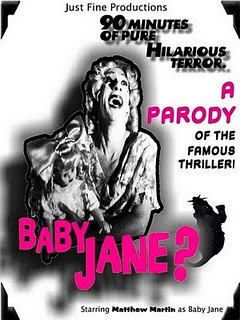
 I spend so much time at Frameline seeing foreign films that I give short shrift to the U.S. features. This year will probably not be an exception, although there's no way I'll miss Baby Jane?, a locally produced drag recreation of Robert Aldrich's 1962 classic What Ever Happened to Baby Jane? I'm also intrigued by The Stranger in Us, after reading Michael Guillén's interview with director Scott Boswell at The Evening Class. BearCity looks like a crowd-pleasing comedy and should be the perfect lead-in to the Castro neighborhood's night-before-Pride street celebration, Pink Saturday. Just don't confuse the film with Bear Nation, a documentary by Malcolm Ingram (Small Town Gay Bar). Director Cheryl Dunye (Watermelon Woman) returns to Frameline with The Owls (short for Older Wiser Lesbians), which reunites the cast of 1994's seminal indie hit, Go Fish. If you like it, you'll probably want to see the film's "making of" documentary Hooters, which screens the following evening. Finally, I've read interesting things about Andy Blubaugh's The Adults in the Room, a meta-narrative about the director's efforts to make a film about a teenage relationship he had with an older man.
 Every year I look at the Frameline documentary line-up and realize I could happily spend the festival seeing nothing else but. Topping my list this year is The Topp Twins: Untouchable Girls, which profiles a pair of yodeling lesbian twins whose stand-up musical-comedy act is all the rage in New Zealand. I'm dying to see the Topps perform live on the Castro Theater stage and you should be, too. Other docs that sound like fun include a Sisters of Perpetual Indulgence profile (The Sisters), a look at the history of gay Mardi Gras (The Sons of Tennessee Williams), a bio-doc about the man who streaked the Oscars ceremony in 1974 (Uncle Bob), a long overdue bio-doc on writer William S. Burroughs (William S. Burroughs: A Man Within) and a close-up on drag cabaret singer Joey Arias and his collaboration with puppeteer Basil Twist (Arias With a Twist: The Docufantasy). Those hoping to see a little flesh in their documentaries should make a date with The Adonis Factor, which deals with gay male body image issues, and All Boys, which gazes in on the world of Czech gay porn.
 Every year Frameline takes place during the 10 days leading up to Gay Pride Day and this year there are four Pride-related documentaries. Stonewall Uprising purports to be the most thorough examination yet of that pivotal event, and On These Shoulders We Stand explores the early gay rights movement in Los Angeles. Gay Days traces the evolution of Pride in Israel, and Beyond Gay: The Politics of Pride is a sober reminder of how awful things are for us in places like Sri Lanka, Poland, Jamaica and Russia. Relatedly, Other Nature takes on the fight for LGBT rights in Nepal. Two documentaries look back on the early years of the AIDS pandemic, The Cockettes' co-director David Weissman's We Were Here: Voices from the AIDS Years in San Francisco and a history of the safe sex movement, Sex in an Epidemic. Preceding the latter is a short by director Ira Sachs (The Delta, Forty Shades of Blue) called Last Address, "a simple, touching reflection on the many wonderful artists we've lost to the disease." Also taking a look back is acclaimed German director Rosa von Praunheim's New York Memories, which compares the sterile NYC of today with the wild place she loved in the 1970s and 1980s. And finally, there's the self-explanatory 8: The Mormon Proposition and Mountains That Take Wing: Angela Davis & Yuri Kochiyama – A Conversation on Life, Struggles and Liberation.
Cross-published on film-415 and Twitch.
 I waited almost a little too long to interview Michael Lumpkin, Frameline's former Executive Director, before his unexpected retirement. I told myself not to hazard the same mistake twice and to make a more concerted effort to get to know and interact with his successor K.C. Price and, further, to become more involved with Frameline's championing presence in the Bay Area. I dropped the ball last year on meeting up with Price but rallied this year. My thanks to K.C. for so graciously considering my 35mm complaints even as he invited me into Frameline's office at the Ninth Street Film Center for a conversation. He carries on Frameline's ongoing tradition of being responsive to its constituency. A tall, affable and well-spoken gentleman, I sensed our conversation would be the first of many in years to come.
 Michael Guillén: K.C., I was Googling you last night to see who the heck you were and I kept getting all these hits on this Black evangelist fleecing his flocks....
 Price: No. Michael Lumpkin hired me in 1999. I came on then and worked for four years as their Development Director. Frameline, CAAM, and the San Francisco Jewish Film Festival co-own the Ninth Street Film Center and—when Frameline moved into the building—we enhanced that partnership. All of a sudden the Center became its own non-profit so I moved from the Frameline position and became the Managing Director of Ninth Street. I did that for five years. I was still basically working closely with Michael and Frameline through those years. When Michael left, I applied for the Executive Director position and that's how I came back into the office directly.
 Price: Absolutely! I feel lucky to have this job. No doubt about it. Of course, anybody working in the non-profit sector with the economy right now has been facing financial challenges—especially at the end of 2008 when all this started—but, we have weathered all that very well and things are going great. No, I couldn't love this job any more. Being in this role last year during my first festival—especially following in Michael's footsteps—felt pretty terrifying sometimes; but, at this point, going into my second year, it feels so much more comfortable to me.
 Guillén: With regard to this year's edition of Frameline, I'd like to focus on the two sidebars I'm most anticipating—the focus on South American queer cinema and the mini-retrospective of the queer shorts of Andy Warhol—and the festival's overriding attention to history. As you went to organize the festival, did these themes present themselves in the submissions received or did you sift through the submissions in search of works to fit chosen themes?
 Price: We do interact with them—not necessarily to make the programming decisions—but, we have a lot of close relationships with several of the other queer film festivals. We get to know each other at the larger film festivals. They're wonderful people working at the other festivals. We have a great working relationship, for example, with Outfest in Los Angeles. One thing we do get out of knowing the other programmers is that sometimes we can check in with each other for tips or if we're looking for information on a particular film; but, it's not a close network in terms of making mutual programming decisions.
 Price: We have two different types of sponsorship support. We have corporate sponsorship where companies, businesses and sometimes non-profits donate either corporate financial gifts or in-kind gifts. The other part of it is the co-presentations where we work with different community organizations—this year I think we have more than 60 different community groups, mainly all non-profit organizations—and they help us get out the word about Frameline and the festival and we get to talk about them at the screenings as well as provide tickets to their constituents so they can attend the festival. Servicemembers Legal Defense Network is one of our relatively new co-presenters that we're excited about this year. They're co-presenting two wonderful films related to Don't Ask Don't Tell: A Marine Story (2010) and Out of Annapolis (2010).
 Guillén: Speaking of the distribution arm, I'd like to follow-up on a question I asked Michael Lumpkin when we spoke a few years back. I expressed to him how much I admired the "Send It Home" program that Frameline initiated back in the late '80s, I believe, and he told me that the program had been discontinued due to administrative complications. He mentioned, however, that it had morphed into Frameline's "Youth In Motion" program, a carryover of the "Send It Home" initiative. Can you speak to where Frameline stands with its "Youth In Motion" program?
 Price: Yes, yes, and yes. [Laughs.] It's really wonderful that we do have all these new platforms and options to see things on television that we didn't used to see; definitely a plethora of queer images in media that weren't available, say, 10-15 years ago. On the other hand, though, Frameline's festival as well as the other LGBT festivals throughout the country still fulfill a really important need of bringing out a large collection of independent, really wonderful LGBT films that you're not going to have access to. If on your cable networks or your IPhone—should that be the medium you prefer to watch films—these films were available, I wonder if it would be a different question? Yet, it isn't. LGBT film festivals really are the only opportunity people will have to see a lot of these works.
 Guillén: A case in point would be François Ozon's Le Refuge, which I caught at Toronto, and which Frameline has included in its line-up, but which was also shown previously in the Bay Area at a preview screening at the recent San Francisco International. I'm curious, did they situate the film in their festival in that way because they knew you were going to be showing it at your festival?
 Price: More of what was out there. We didn't purposely do that. We did more consciously program the Warhol sidebar just because of a number of things that had happened over the past few years. We thought it would be a nice add-on after the underground cinema we programmed last year. Plus, we were motivated by the wonderful Centerpiece documentary Beautiful Darling: The Life and Times of Candy Darling, Andy Warhol Superstar.
 Price: No, we worked with Canyon Cinema last year for our special program on underground cinema; but, this year we're working with MOMA for the Warhol films since they had the 16mm prints. They just came in the other day. I was excited when the big box arrived. Ron Gregg, the Yale film studies professor who's curated the sidebar, is absolutely marvelous and I'm personally looking forward to his lecture as well.
 So, for example, I was really excited how much you loved The Consul of Sodom. I did too. One of the things that just fascinated me about the film so much was that I would never think that a person such as the poet portrayed in that film would have led such a life in post-World War II Franco Spain. It surprised me; but, then—watching the film—I thought, "Well, of course." I would have thought it would have been a more oppressive time where a gay man couldn't live quite as openly; but, then again, when you come from such a wealthy family, you can get away with a lot more.
 Guillén: I'm likewise invested in several of the projects chosen this year. Scott Boswell's The Stranger In Us is dear to my heart and I'm so pleased it sold out its original Roxie engagement, such that you've added a second screening at the Castro.