By the time Frameline34's Closing Night film unspooled on Gay Pride Day, everyone seemed to agree it had been the organization's best festival in years. I'm not sure I concur, simply because imho the fest has been on a high for some time now. Or maybe I've just gotten good at sniffing out stuff I'll like, to the exclusion of what might work my last gay nerve. This year's films ranged from the frequently sublime to the occasionally unremarkable, but mileage varies and even those lesser works found receptive audiences. All told, I saw 34 programs—18 of them prior to the festival at press screenings, other festivals and on DVD screener. Here are some highlights of those I watched during Frameline34 proper.
We Were Here: Voices from the AIDS Years in San Francisco—If you caught the sneak preview of David Weissman's powerful new documentary, the experience no doubt overshadowed whatever else you might have seen during the 11-day festival. It proved to be unbearably cathartic for some, and anguished sobs could be heard emanating from all parts of the nearly sold-out Castro Theater. The film reflects back to a time—can it really be almost 30 years ago—when a disease turned this city into a war zone and the LGBT community rallied to care for its own. Weissman wisely chose to tell this story from the POV of five who were on the front lines, rather than through a multitude of voices. It received perhaps the longest Castro Theater standing ovation I've witnessed in 35 years, and afterwards Weissman had the audience sit in meditative silence before beginning the Q&A. The version we saw is still being tweaked, which is perhaps why the Frameline34 screening was a "sneak preview" rather than a premiere. It seemed pretty damn near perfect to me.
The Topp Twins: Untouchable Girls—My hat goes off to whoever programmed this documentary about yodeling lesbian twins from New Zealand immediately after We Were Here. It served as a counteractive tonic to the previous film's intensity, and was almost more fun than a festival screening has a right to be. Singer-comedian-activists Jools and Lynda Topp took to the Castro stage and kicked things off with a rousing, foot-stomping Maori welcoming song, and later returned to give the audience yodeling lessons. In between we were treated to Leanne Pooley's exceptionally well made and inspirational doc.
Sex, Leather Jackets and Cigarettes—I attended Yale film professor Ron Gregg's informative Frameline lecture, Gay Aesthetics and Iconography in the Films of Andy Warhol, which primed me for that same evening's program of two Warhol shorts and one near-feature, Vinyl. The latter is a tortured and rambling low-rent interpretation of Anthony Burgess' A Clockwork Orange, but it features a sock-o mid-section in which Warhol Factory beauty Gerard Malanga dances a furious frug to Martha and the Vandellas' "Nowhere to Hide." The song ends and then immediately begins again, Malanga dancing with even wilder abandon in the second go-round. Meanwhile, too-cool-for-school Edie Sedgwick does a seductive, sit-down dance off to the side. I just loved seeing this on a big screen in 16mm. In the YouTube clip below, fast-forward to the 3:30 mark for the dance, or watch from the beginning to see how that segment radically contrasts with the rest of the movie.
I Killed My Mother—I was wowed by this film when I first saw it at the Palm Springs International Film Festival, and feared the disappointment a second viewing might bring. But nothing doing. Watching it again with a packed, queer audience at the Castro, in lush 35mm, only convinced me that this brutally hilarious and touching tale of an uber-dysfunctional mother-son relationship is the most auspicious debut by a teenage powerhouse writer/director/actor in like … forever. Bravo Monsieur Xavier Dolan! Regent Releasing has picked this up for U.S. distribution and if we're lucky it'll be in theaters soon.
The Consul of Sodom—For close to 25 years, my friend and fellow Frameline fanatic Carlo and I have used the euphemism "masterpiece" to describe any non-porn film that contains full-frontal male nudity. If we say it in a loud, emphatic voice, it means there was also at least one erect penis. We both agreed that The Consul of Sodom was a MASTERPIECE! Genitalia aside, the film is a smart and passionate portrayal of Catalan poet Jaime Gil de Biedma, a gay man of privilege who fought to live an uncompromised life during a time a great repression. Michael Guillén has written eloquently about the film previously on The Evening Class.
On These Shoulders We Stand; William S. Burroughs: A Man Within—Although they pretty much stick to a talking heads and archival materials template, I appreciated these docs for the information they imparted. Most people are familiar with the history of LGBT rights in New York and San Francisco—but Los Angeles? Now I know all about L.A.'s "masquerading" law that was used to persecute both male and female cross-dressers, as well as the infamous 1968 police raid on The Patch bar. The film features some amazing old photos, several of which tend to get overused. What struck me about the Burroughs doc was its emphasis on the man's influence on punk rock. We get interviews with Patti Smith, Jello Biafra, Iggy Pop and best of all, video footage of a Sonic Youth pilgrimage to Burroughs' Kansas home. The true topper, however, is an audio clip of Burroughs singing Marlene Dietrich's "Falling in Love Again," in German!
Howl—Rob Epstein and Jeffrey Friedman's new film about Allen Ginsberg was much better than expected, at least when compared to the tepid reviews it received from Sundance and Berlin. The film's three distinctive strands don't always mesh, but the animated poem is glorious, the obscenity trial is engaging and James Franco gives the Ginsberg portrayal his all. This was Frameline34's closing night film and it was really neat seeing Franco grace the Castro Theater stage for the second time in less than a year.
Spring Fever—This film from Chinese director Lou Ye got universally crummy reviews at Cannes 2009, before shocking the naysayers with a prize for Best Screenplay. I found myself completely caught up during its first third—a vibrant and sexy look at modern urban Chinese living modern lives, with a multi-sexual ménage à quatre at its core. Then it got bogged down in a bunch of strained, unconvincing melodramatics that made me fear, as did Lou's previous film Summer Palace, that the damn thing might never ever end. And maybe I'm misreading, but Spring Fever appears to say some disturbing things about the poisonous effect gays have on the lives of straights. I expected Lou Ye to be cooler than that. Still, I'm grateful to Frameline for showing it—especially in 35mm—and letting me judge for myself.
The queer cinema aesthetics of Andy Warhol, a bounty of LGBT films from South America and a documentary about yodeling twin lesbians from New Zealand are among the highlights of the 34th edition of Frameline, the oldest and largest festival of its kind in the world. Executive Director K.C. Price and Festival Director Jennifer Morris took turns delivering an overview of this year's fest at a press conference last Tuesday. They've programmed everything that's popped up on my cinephilic gaydar in the past 12 months save for one film, Pietro Marcello's The Mouth of the Wolf, which won the Berlin Film Festival's 2010 Teddy Award for Best Documentary. I suspect it'll now show up at the SF Film Society's New Italian Cinema series this fall. Several films have already screened at other Bay Area festivals, but it's nice they've been brought back for the many people who don't attend any other film festival besides Frameline. What's more, the organization has managed to hold ticket prices steady for yet one more year. The following is my subjective overview—meaning an emphasis on the "G" and light on the "L," "B" and "T"—of 2010's massive line-up.
Frameline34 opens on June 17 with The Secret Diaries of Miss Anne Lister, a British TV biopic about an 18th century landowning lesbian whose lusty, coded diaries were only recently decrypted. Director James Kent and actress Maxine Peake are expected to attend. Those who want to learn more about Lister will want to catch the following day's Castro matinee screening of the documentary, The Real Anne Lister.
The festival closes on Pride Day, June 27 with Rob Epstein and Jeffrey Freidman's Howl, a genre-bending meditation on Allen Ginsberg's revolutionary poem. The film got mixed reviews when it premiered at Sundance, but I wouldn't dream of missing this screening with the celebrated filmmakers (The Times of Harvey Milk, The Celluloid Closet) and star James Franco in attendance. The San Francisco Botanical Garden in Golden Gate Park will serve as venue for both opening and closing night parties.
Perhaps inspired by the adulatory appearance of Joe Dallesandro at 2009's festival, Frameline34 will survey Andy's Warhol's output as pioneer of the queer underground cinema movement. Yale University Senior Lecturer and Programming Director Ronald Gregg will be on hand to deliver a lecture with clips and stills titled Gay Aesthetics and Iconography in the Films of Andy Warhol. Supplementing that event will be two retrospective programs of rarely seen Warhol films, Hustlers and Exhibitionists (featuring Haircut #1 and My Hustler) and Sex, Leather Jackets and Cigarettes (featuring Mario Banana #1, Mario Banana #2 and Vinyl). Topping off the Warhol focus is Centerpiece Documentary Beautiful Darling: The Life and Times of Candy Darling, Andy Warhol Superstar, about the actress immortalized in the lyrics of Lou Reed's "Walk on the Wild Side": "Candy came from out on the Island. In the backroom she was everybody's darling. But she never lost her head, even when she was giving head."
There were enough films from Brazil, Argentina and Peru this year to warrant their own festival sidebar, South America's New Queer Cinema. Be sure and check out the fine introductory essay on page 24 of the festival catalog, written by Lucho Ramirez from Cine + Mas. Plan B is a sweetly unnerving Argentine "bromance" that goes where infantile U.S. indie Humpday didn't dare. Also from Argentina is The Fish Child, Lucía Puenzo's follow-up to Frameline32's audience award winner XXY. (The Fish Child also screened at Frameline last year in a TBA slot). The theme of intersex adolescents explored in XXY shows up this year in another Argentine film, The Last Summer of La Boyita.
From Brazil you shouldn't miss the fabulous documentary Dzi Croquettes, about a drag troupe inspired by SF's own Cockettes who ultimately surpassed—both creatively and professionally—their American counterparts. Too bad the lone screening of this is at 11:00AM on a Monday. One Brazilian film I'm anticipating, albeit for the beefcake factor alone, is Aluízio Abranches' From Beginning to End. This story of half-brother incest was a controversial box office smash in Brazil last year. At the Frameline press conference, Jennifer Morris declared Brazil's Elvis and Madona to be one of her "absolute favorites" of the fest. It's about the romance between a dyke pizza deliverer/photographer (Elvis) and a transwoman cabaret performer (Madonna). Rounding out the Brazilian selection is Paulista, which concerns three tenants in a São Paulo apartment building all searching for love. Finally, we have this year's Centerpiece Film from Peru, Undertow. Winner of the audience award for Best World Narrative Feature at this year's Sundance Film Festival, this is a poignant, fanciful tale of a life-changing love between a married fisherman and a vacationing artist.
LGBT films and filmmakers have gained increasing influence in the world of international art cinema, as evidenced at the recent Cannes Film Festival. An openly gay Thai director took the fest's top honor, the Palme d'or (Apichatpong Weerasethakul's Uncle Boonmee Who Can Recall His Past Lives), and the fest awarded its first ever Queer Palme to Frameline alum Gregg Araki's Kaboom. At last year's Cannes, a 19-year-old queer French-Canadian named Xavier Dolan won three prizes in the Directors' Fortnight side-bar with his stunning debut film I Killed My Mother. If I had to name one must-see film at this year's Frameline, this scabrously funny and ultimately touching mother-son verbal slugfest would be it. Dolan returned to Cannes this year with another film, Heartbeats, which we'll no doubt be seeing at Frameline35.
François Ozon (8 Women, Swimming Pool) and Sébastien Lifshitz (Come Undone, Wild Side) are two French filmmakers with names familiar to Frameline audiences. I missed Ozon's new film, Hideaway, when it screened as a sneak preview at the recent SF International Film Festival. French pop music star Louis-Ronan Choisy plays a young gay man who takes care of his dead brother's pregnant junkie girlfriend. The original French title was Le Refuge, and I don't quite understand the clunky name-change. Did Le Refuge, The Refuge or simply Refuge not have the right ring? In Lifshitz' Going South, a brooding Yannick Renier (older brother of European art film habitué Jérémie Renier) drives to Spain in his Ford with a pregnant girl, her gay brother and a macho stranger in tow—imagine the possibilities. I'm also excited to see The String, in which a gay architect returns to Tunisia to live with his mother and falls in love with the family handyman. Mom is played by Tunisian-born, Italian screen legend Claudia Cardinale and the handyman by French-Arab actor (Ozons's Criminal Lovers) and former Pierre et Gilles model Salim Kéchiouche. A fourth French film, Out of the Blue, is about a woman who walks out of a 22-year marriage and into the arms of a beautiful antiques dealer.
I can't remember the last time Frameline had so few films from Asia. Fortunately, they've programmed the one I really wanted to see, Lou Ye's Spring Fever. In 2006, Lou was banned from filmmaking for five years by pissed-off Chinese authorities. It was punishment for submitting his film Summer Palace to the Cannes Film Festival without government approval. He circumvented the ban by shooting Spring Fever on the sly and submitting it to Cannes in 2009. The film, in which is woman hires a private detective to follow her husband and his male lover, got decidedly mixed reviews. But to everyone's surprise, the Cannes jury awarded the film its prize for Best Screenplay. The only other Asian narrative feature in Frameline34 is Mateo Guez' Off World, about an adopted Canadian-Filipino who returns to Manila in search of family and reconnects with a gay hustler brother.
Of the remaining World Cinema features, I can strongly recommend Eyes Wide Open, a tale of clandestine love between a married, ultra-Orthodox Jerusalem butcher and the younger man he takes on as an apprentice. I wasn't so crazy about the Danish gay-neo-Nazis-in-love movie, Brotherhood, despite its win as Best Film at the 2009 Rome Film Festival. I'll be writing more about these later. I certainly won't miss the rare revival screening of 1958's Mädchen in Uniform, starring the fabulous Romy Schneider as a schoolgirl with a mad crush on teacher Lilli Palmer. I heard very good things about 19th century Sicilian lesbian melodrama The Sea Purple, when it screened last year as part of the SF Film Society's New Italian Cinema series. Another one that sounds promising is The Consul of Sodom, a biopic on Spanish writer Jaime Gil de Biedma which was nominated for five Goya Awards (Spain's Oscar). Should time and energy permit, I'll also check out Norway's The Man Who Loved Yngve and a rare gay film from the homophobic Caribbean, Children of God from the Bahamas.
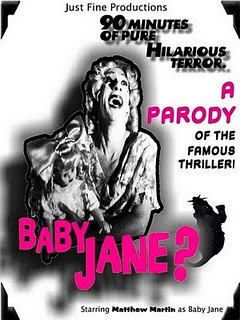
I spend so much time at Frameline seeing foreign films that I give short shrift to the U.S. features. This year will probably not be an exception, although there's no way I'll miss Baby Jane?, a locally produced drag recreation of Robert Aldrich's 1962 classic What Ever Happened to Baby Jane? I'm also intrigued by The Stranger in Us, after reading Michael Guillén's interview with director Scott Boswell at The Evening Class. BearCity looks like a crowd-pleasing comedy and should be the perfect lead-in to the Castro neighborhood's night-before-Pride street celebration, Pink Saturday. Just don't confuse the film with Bear Nation, a documentary by Malcolm Ingram (Small Town Gay Bar). Director Cheryl Dunye (Watermelon Woman) returns to Frameline with The Owls (short for Older Wiser Lesbians), which reunites the cast of 1994's seminal indie hit, Go Fish. If you like it, you'll probably want to see the film's "making of" documentary Hooters, which screens the following evening. Finally, I've read interesting things about Andy Blubaugh's The Adults in the Room, a meta-narrative about the director's efforts to make a film about a teenage relationship he had with an older man.
Every year I look at the Frameline documentary line-up and realize I could happily spend the festival seeing nothing else but. Topping my list this year is The Topp Twins: Untouchable Girls, which profiles a pair of yodeling lesbian twins whose stand-up musical-comedy act is all the rage in New Zealand. I'm dying to see the Topps perform live on the Castro Theater stage and you should be, too. Other docs that sound like fun include a Sisters of Perpetual Indulgence profile (The Sisters), a look at the history of gay Mardi Gras (The Sons of Tennessee Williams), a bio-doc about the man who streaked the Oscars ceremony in 1974 (Uncle Bob), a long overdue bio-doc on writer William S. Burroughs (William S. Burroughs: A Man Within) and a close-up on drag cabaret singer Joey Arias and his collaboration with puppeteer Basil Twist (Arias With a Twist: The Docufantasy). Those hoping to see a little flesh in their documentaries should make a date with The Adonis Factor, which deals with gay male body image issues, and All Boys, which gazes in on the world of Czech gay porn.
Every year Frameline takes place during the 10 days leading up to Gay Pride Day and this year there are four Pride-related documentaries. Stonewall Uprising purports to be the most thorough examination yet of that pivotal event, and On These Shoulders We Stand explores the early gay rights movement in Los Angeles. Gay Days traces the evolution of Pride in Israel, and Beyond Gay: The Politics of Pride is a sober reminder of how awful things are for us in places like Sri Lanka, Poland, Jamaica and Russia. Relatedly, Other Nature takes on the fight for LGBT rights in Nepal. Two documentaries look back on the early years of the AIDS pandemic, The Cockettes' co-director David Weissman's We Were Here: Voices from the AIDS Years in San Francisco and a history of the safe sex movement, Sex in an Epidemic. Preceding the latter is a short by director Ira Sachs (The Delta, Forty Shades of Blue) called Last Address, "a simple, touching reflection on the many wonderful artists we've lost to the disease." Also taking a look back is acclaimed German director Rosa von Praunheim's New York Memories, which compares the sterile NYC of today with the wild place she loved in the 1970s and 1980s. And finally, there's the self-explanatory 8: The Mormon Proposition and Mountains That Take Wing: Angela Davis & Yuri Kochiyama – A Conversation on Life, Struggles and Liberation.
 By the time Frameline34's Closing Night film unspooled on Gay Pride Day, everyone seemed to agree it had been the organization's best festival in years. I'm not sure I concur, simply because imho the fest has been on a high for some time now. Or maybe I've just gotten good at sniffing out stuff I'll like, to the exclusion of what might work my last gay nerve. This year's films ranged from the frequently sublime to the occasionally unremarkable, but mileage varies and even those lesser works found receptive audiences. All told, I saw 34 programs—18 of them prior to the festival at press screenings, other festivals and on DVD screener. Here are some highlights of those I watched during Frameline34 proper.
 We Were Here: Voices from the AIDS Years in San Francisco—If you caught the sneak preview of David Weissman's powerful new documentary, the experience no doubt overshadowed whatever else you might have seen during the 11-day festival. It proved to be unbearably cathartic for some, and anguished sobs could be heard emanating from all parts of the nearly sold-out Castro Theater. The film reflects back to a time—can it really be almost 30 years ago—when a disease turned this city into a war zone and the LGBT community rallied to care for its own. Weissman wisely chose to tell this story from the POV of five who were on the front lines, rather than through a multitude of voices. It received perhaps the longest Castro Theater standing ovation I've witnessed in 35 years, and afterwards Weissman had the audience sit in meditative silence before beginning the Q&A. The version we saw is still being tweaked, which is perhaps why the Frameline34 screening was a "sneak preview" rather than a premiere. It seemed pretty damn near perfect to me.
 The Topp Twins: Untouchable Girls—My hat goes off to whoever programmed this documentary about yodeling lesbian twins from New Zealand immediately after We Were Here. It served as a counteractive tonic to the previous film's intensity, and was almost more fun than a festival screening has a right to be. Singer-comedian-activists Jools and Lynda Topp took to the Castro stage and kicked things off with a rousing, foot-stomping Maori welcoming song, and later returned to give the audience yodeling lessons. In between we were treated to Leanne Pooley's exceptionally well made and inspirational doc.
 The Consul of Sodom—For close to 25 years, my friend and fellow Frameline fanatic Carlo and I have used the euphemism "masterpiece" to describe any non-porn film that contains full-frontal male nudity. If we say it in a loud, emphatic voice, it means there was also at least one erect penis. We both agreed that The Consul of Sodom was a MASTERPIECE! Genitalia aside, the film is a smart and passionate portrayal of Catalan poet Jaime Gil de Biedma, a gay man of privilege who fought to live an uncompromised life during a time a great repression. Michael Guillén has written eloquently about the film previously on The Evening Class.
 On These Shoulders We Stand; William S. Burroughs: A Man Within—Although they pretty much stick to a talking heads and archival materials template, I appreciated these docs for the information they imparted. Most people are familiar with the history of LGBT rights in New York and San Francisco—but Los Angeles? Now I know all about L.A.'s "masquerading" law that was used to persecute both male and female cross-dressers, as well as the infamous 1968 police raid on The Patch bar. The film features some amazing old photos, several of which tend to get overused. What struck me about the Burroughs doc was its emphasis on the man's influence on punk rock. We get interviews with Patti Smith, Jello Biafra, Iggy Pop and best of all, video footage of a Sonic Youth pilgrimage to Burroughs' Kansas home. The true topper, however, is an audio clip of Burroughs singing Marlene Dietrich's "Falling in Love Again," in German!
 Spring Fever—This film from Chinese director Lou Ye got universally crummy reviews at Cannes 2009, before shocking the naysayers with a prize for Best Screenplay. I found myself completely caught up during its first third—a vibrant and sexy look at modern urban Chinese living modern lives, with a multi-sexual ménage à quatre at its core. Then it got bogged down in a bunch of strained, unconvincing melodramatics that made me fear, as did Lou's previous film Summer Palace, that the damn thing might never ever end. And maybe I'm misreading, but Spring Fever appears to say some disturbing things about the poisonous effect gays have on the lives of straights. I expected Lou Ye to be cooler than that. Still, I'm grateful to Frameline for showing it—especially in 35mm—and letting me judge for myself.