Despite its boasting 219 films from 31 countries, Frameline's 34th edition will be offering only 11 features and 3 shorts in 35mm projection. That's a shocking imbalance in exhibition formats; but, mine is more an expression of disappointment than a direct criticism of the festival's programmers. I'm not naïve. Print availability, rental fees, and trafficking expenses coupled with green efforts to reduce carbon footprints have long factored into the films chosen for any festival lineup and—perhaps even more pertinent to Frameline—we're fortunate that the marginalized narratives of LGBT programming exist at all, albeit in digital format, set apart from the cost-prohibitive privileges of mainstream film production. Asked at the Frameline press conference if any of the films were "political" in nature, Festival Director Jennifer Morris responded (quite appropriately) that just to share these LGBT narratives is a political act in itself, and with that I have no argument.
Notwithstanding, Frameline's heavy reliance on digital projection breeds specific concerns. For starters, the term "film" as in "film festival" appears to have capsized in order to accommodate alternative exhibition formats, and I'm not so sure this practice should be blithely accepted. Perhaps I'm being old-fashioned, but for me a "film" is on film. Anything else is digital media and should be understood and specified as such. I'll grant that both can be called movies. Has the time come to qualify that Frameline is the world's leading LGBT film and digital media festival? At what point is transparency required? I would say from hereon in.
Earlier this year at the San Francisco International Asian American Film Festival (SFIAAFF), I was impressed that exhibition formats were detailed in CAAM's festival catalog. CAAM won high points for this gesture towards transparency. There's no denying that filmgoers are consumers and deserve to know what they're getting when they slap down $7-$10 (if not more) for a ticket. I'm disappointed that the San Francisco Film Society and now Frameline have not followed SFIAAFF's commendable lead in this regard. Perhaps they are operating off the mistaken assumption that filmgoers don't care how they see a film projected? Or that they can't tell the difference between a 35mm projection and a digital projection? Or that filmgoers are more concerned with narrative integrity than visual quality? And should that—woefully—be the case, who is responsible for training audiences in visual acuity and format discernment? Nonprofit advocacy groups such as the Film on Film Foundation or the Film Noir Foundation can only do so much. Organizations such as the San Francisco Film Society and Frameline are more in a position to advance such discernments to their respective constituencies by—at the very least—spelling them out in their program capsules. I encourage them to do so in the future.
Perhaps this would not be so much an issue if the equipment necessary to project digital media were state-of-the-art; but, by contrast to the pristine digital projections I've experienced at, let's say, the Toronto International Film Festival or even the Palm Springs International—digital projection at The Castro Theater, the Roxie Film Center and the Victoria Theater (Frameline's San Francisco venues) leave a lot to be desired, if not in the in-house equipment itself, then in the physical product offered by filmmakers for screening.
Case in point would be the two films screened at last week's Frameline press conference. The Secret Diaries of Miss Anne Lister (dir. James Kent 2010 UK) and Undertow (Contracorriente, dir. Javier Fuentes-León 2009 Peru) were both sufficiently intriguing narratives to warrant recommendation—the first being Frameline's Opening Night feature and the second its Centerpiece presentation—however, both viewing experiences were marred by poor digital projection that washed out skin tones and leached color from the imagery. Granted, Frameline will offset this deficiency with the value added from the on-stage appearances of talent and the anticipatory and conciliatory vibe of its audiences; but, the dilemma remains: these films are not being seen at their best. Despite its interesting story, I find it highly problematic to recommend that anyone pay $30-$35 ($75-$90, if you're inclined towards the gala) to view Frameline's opening night film The Secret Diaries of Miss Anne Lister. At least with its opening night selection, I would have hoped for a 35mm print to launch the festivities appropriately. And should a 35mm print not be available for this title, I would have preferred an alternate selection which would be available in 35mm. Undertow requires a lesser investment of $10-$15, but even so—as its Centerpiece—Frameline should have exerted a bit more effort and considerable more care in the quality of projection.
Truth is that I will probably take advantage of my privilege as press to watch the bulk of Frameline's digital fare on screener. I might as well. As much as I have complained in the past about being forced to watch festival fare on screeners, the more digital the festivals become, the more attractive the alternative of home viewing becomes.
Now lest I be thought of as biting the hand that feeds me, let me be quick to quote from the introductory editorial to the Summer 2010 issue of Cineaste (via Dave Hudson at MUBI) whose thematic focus lands squarely on the at-home DVD viewing experience and the so-called "new cinephilia", but which lends commensurate insight to my concern with digital theatrical exhibition: "[W]hat's important is not necessarily to privilege one mode of movie-watching over another," the editors argue. "Rather, the point is to maintain a sensitivity to how a particular film is affected by the circumstances in which it's viewed—something that's increasingly important as individual films come to be available from a dizzying variety of sources." And, it might be added, a dizzying variety of formats. Here, I must defer—as referenced earlier—that the anticipatory enthusiasm of Frameline's audiences and the collective experience of enjoying a "film" with such a like-minded audience is a strength that helps to offset any weakness in exhibition formats. I would still prefer, however, that—as an audience—we celebrate not only our unique stories but their visual quality as well. For those who care, here are the Frameline films being shown in 35mm:
Short films
Close (Pod Bluzka, 2008)—This nine-minute Polish short by Lucia Von Horn Pagana will have its US premiere as part of the Tough Girls shorts program.
Masala Mama (2010)—This nine-minute Singaporean short by Michael Kam will have its world premiere in The Golden Pin shorts program.
The New Tenants (2009)—Joachim Back's 21-minute short is part of Frameline's popular Fun In Boys' Shorts program.
Features
Going South (Plein Sud, 2009)
Grown Up Movie Star (2009)
Hideaway (Le Refuge, 2009)
I Killed My Mother (J'ai Tué Ma Mère, 2009)
Last Summer of La Boyita, The (El ultimo verano de la Boyita, 2009)
Mädchen In Uniform (1958)
Man Who Loved Yngve, The (2008)
Sasha (2010)
Purple Sea, The (2009)
Spring Fever (2009)
Topp Twins: Untouchable Girls, The (2009)
Cross-published on Twitch.
 The queer cinema aesthetics of Andy Warhol, a bounty of LGBT films from South America and a documentary about yodeling twin lesbians from New Zealand are among the highlights of the 34th edition of Frameline, the oldest and largest festival of its kind in the world. Executive Director K.C. Price and Festival Director Jennifer Morris took turns delivering an overview of this year's fest at a press conference last Tuesday. They've programmed everything that's popped up on my cinephilic gaydar in the past 12 months save for one film, Pietro Marcello's The Mouth of the Wolf, which won the Berlin Film Festival's 2010 Teddy Award for Best Documentary. I suspect it'll now show up at the SF Film Society's New Italian Cinema series this fall. Several films have already screened at other Bay Area festivals, but it's nice they've been brought back for the many people who don't attend any other film festival besides Frameline. What's more, the organization has managed to hold ticket prices steady for yet one more year. The following is my subjective overview—meaning an emphasis on the "G" and light on the "L," "B" and "T"—of 2010's massive line-up.
 Frameline34 opens on June 17 with The Secret Diaries of Miss Anne Lister, a British TV biopic about an 18th century landowning lesbian whose lusty, coded diaries were only recently decrypted. Director James Kent and actress Maxine Peake are expected to attend. Those who want to learn more about Lister will want to catch the following day's Castro matinee screening of the documentary, The Real Anne Lister.
 The festival closes on Pride Day, June 27 with Rob Epstein and Jeffrey Freidman's Howl, a genre-bending meditation on Allen Ginsberg's revolutionary poem. The film got mixed reviews when it premiered at Sundance, but I wouldn't dream of missing this screening with the celebrated filmmakers (The Times of Harvey Milk, The Celluloid Closet) and star James Franco in attendance. The San Francisco Botanical Garden in Golden Gate Park will serve as venue for both opening and closing night parties.
 Perhaps inspired by the adulatory appearance of Joe Dallesandro at 2009's festival, Frameline34 will survey Andy's Warhol's output as pioneer of the queer underground cinema movement. Yale University Senior Lecturer and Programming Director Ronald Gregg will be on hand to deliver a lecture with clips and stills titled Gay Aesthetics and Iconography in the Films of Andy Warhol. Supplementing that event will be two retrospective programs of rarely seen Warhol films, Hustlers and Exhibitionists (featuring Haircut #1 and My Hustler) and Sex, Leather Jackets and Cigarettes (featuring Mario Banana #1, Mario Banana #2 and Vinyl). Topping off the Warhol focus is Centerpiece Documentary Beautiful Darling: The Life and Times of Candy Darling, Andy Warhol Superstar, about the actress immortalized in the lyrics of Lou Reed's "Walk on the Wild Side": "Candy came from out on the Island. In the backroom she was everybody's darling. But she never lost her head, even when she was giving head."
 There were enough films from Brazil, Argentina and Peru this year to warrant their own festival sidebar, South America's New Queer Cinema. Be sure and check out the fine introductory essay on page 24 of the festival catalog, written by Lucho Ramirez from Cine + Mas. Plan B is a sweetly unnerving Argentine "bromance" that goes where infantile U.S. indie Humpday didn't dare. Also from Argentina is The Fish Child, Lucía Puenzo's follow-up to Frameline32's audience award winner XXY. (The Fish Child also screened at Frameline last year in a TBA slot). The theme of intersex adolescents explored in XXY shows up this year in another Argentine film, The Last Summer of La Boyita.
 From Brazil you shouldn't miss the fabulous documentary Dzi Croquettes, about a drag troupe inspired by SF's own Cockettes who ultimately surpassed—both creatively and professionally—their American counterparts. Too bad the lone screening of this is at 11:00AM on a Monday. One Brazilian film I'm anticipating, albeit for the beefcake factor alone, is Aluízio Abranches' From Beginning to End. This story of half-brother incest was a controversial box office smash in Brazil last year. At the Frameline press conference, Jennifer Morris declared Brazil's Elvis and Madona to be one of her "absolute favorites" of the fest. It's about the romance between a dyke pizza deliverer/photographer (Elvis) and a transwoman cabaret performer (Madonna). Rounding out the Brazilian selection is Paulista, which concerns three tenants in a São Paulo apartment building all searching for love. Finally, we have this year's Centerpiece Film from Peru, Undertow. Winner of the audience award for Best World Narrative Feature at this year's Sundance Film Festival, this is a poignant, fanciful tale of a life-changing love between a married fisherman and a vacationing artist.
 LGBT films and filmmakers have gained increasing influence in the world of international art cinema, as evidenced at the recent Cannes Film Festival. An openly gay Thai director took the fest's top honor, the Palme d'or (Apichatpong Weerasethakul's Uncle Boonmee Who Can Recall His Past Lives), and the fest awarded its first ever Queer Palme to Frameline alum Gregg Araki's Kaboom. At last year's Cannes, a 19-year-old queer French-Canadian named Xavier Dolan won three prizes in the Directors' Fortnight side-bar with his stunning debut film I Killed My Mother. If I had to name one must-see film at this year's Frameline, this scabrously funny and ultimately touching mother-son verbal slugfest would be it. Dolan returned to Cannes this year with another film, Heartbeats, which we'll no doubt be seeing at Frameline35.
 François Ozon (8 Women, Swimming Pool) and Sébastien Lifshitz (Come Undone, Wild Side) are two French filmmakers with names familiar to Frameline audiences. I missed Ozon's new film, Hideaway, when it screened as a sneak preview at the recent SF International Film Festival. French pop music star Louis-Ronan Choisy plays a young gay man who takes care of his dead brother's pregnant junkie girlfriend. The original French title was Le Refuge, and I don't quite understand the clunky name-change. Did Le Refuge, The Refuge or simply Refuge not have the right ring? In Lifshitz' Going South, a brooding Yannick Renier (older brother of European art film habitué Jérémie Renier) drives to Spain in his Ford with a pregnant girl, her gay brother and a macho stranger in tow—imagine the possibilities. I'm also excited to see The String, in which a gay architect returns to Tunisia to live with his mother and falls in love with the family handyman. Mom is played by Tunisian-born, Italian screen legend Claudia Cardinale and the handyman by French-Arab actor (Ozons's Criminal Lovers) and former Pierre et Gilles model Salim Kéchiouche. A fourth French film, Out of the Blue, is about a woman who walks out of a 22-year marriage and into the arms of a beautiful antiques dealer.
 I can't remember the last time Frameline had so few films from Asia. Fortunately, they've programmed the one I really wanted to see, Lou Ye's Spring Fever. In 2006, Lou was banned from filmmaking for five years by pissed-off Chinese authorities. It was punishment for submitting his film Summer Palace to the Cannes Film Festival without government approval. He circumvented the ban by shooting Spring Fever on the sly and submitting it to Cannes in 2009. The film, in which is woman hires a private detective to follow her husband and his male lover, got decidedly mixed reviews. But to everyone's surprise, the Cannes jury awarded the film its prize for Best Screenplay. The only other Asian narrative feature in Frameline34 is Mateo Guez' Off World, about an adopted Canadian-Filipino who returns to Manila in search of family and reconnects with a gay hustler brother.
 Of the remaining World Cinema features, I can strongly recommend Eyes Wide Open, a tale of clandestine love between a married, ultra-Orthodox Jerusalem butcher and the younger man he takes on as an apprentice. I wasn't so crazy about the Danish gay-neo-Nazis-in-love movie, Brotherhood, despite its win as Best Film at the 2009 Rome Film Festival. I'll be writing more about these later. I certainly won't miss the rare revival screening of 1958's Mädchen in Uniform, starring the fabulous Romy Schneider as a schoolgirl with a mad crush on teacher Lilli Palmer. I heard very good things about 19th century Sicilian lesbian melodrama The Sea Purple, when it screened last year as part of the SF Film Society's New Italian Cinema series. Another one that sounds promising is The Consul of Sodom, a biopic on Spanish writer Jaime Gil de Biedma which was nominated for five Goya Awards (Spain's Oscar). Should time and energy permit, I'll also check out Norway's The Man Who Loved Yngve and a rare gay film from the homophobic Caribbean, Children of God from the Bahamas.
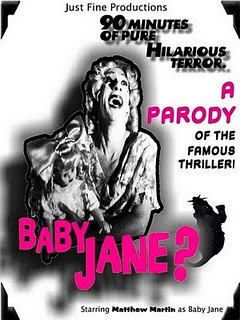
 I spend so much time at Frameline seeing foreign films that I give short shrift to the U.S. features. This year will probably not be an exception, although there's no way I'll miss Baby Jane?, a locally produced drag recreation of Robert Aldrich's 1962 classic What Ever Happened to Baby Jane? I'm also intrigued by The Stranger in Us, after reading Michael Guillén's interview with director Scott Boswell at The Evening Class. BearCity looks like a crowd-pleasing comedy and should be the perfect lead-in to the Castro neighborhood's night-before-Pride street celebration, Pink Saturday. Just don't confuse the film with Bear Nation, a documentary by Malcolm Ingram (Small Town Gay Bar). Director Cheryl Dunye (Watermelon Woman) returns to Frameline with The Owls (short for Older Wiser Lesbians), which reunites the cast of 1994's seminal indie hit, Go Fish. If you like it, you'll probably want to see the film's "making of" documentary Hooters, which screens the following evening. Finally, I've read interesting things about Andy Blubaugh's The Adults in the Room, a meta-narrative about the director's efforts to make a film about a teenage relationship he had with an older man.
 Every year I look at the Frameline documentary line-up and realize I could happily spend the festival seeing nothing else but. Topping my list this year is The Topp Twins: Untouchable Girls, which profiles a pair of yodeling lesbian twins whose stand-up musical-comedy act is all the rage in New Zealand. I'm dying to see the Topps perform live on the Castro Theater stage and you should be, too. Other docs that sound like fun include a Sisters of Perpetual Indulgence profile (The Sisters), a look at the history of gay Mardi Gras (The Sons of Tennessee Williams), a bio-doc about the man who streaked the Oscars ceremony in 1974 (Uncle Bob), a long overdue bio-doc on writer William S. Burroughs (William S. Burroughs: A Man Within) and a close-up on drag cabaret singer Joey Arias and his collaboration with puppeteer Basil Twist (Arias With a Twist: The Docufantasy). Those hoping to see a little flesh in their documentaries should make a date with The Adonis Factor, which deals with gay male body image issues, and All Boys, which gazes in on the world of Czech gay porn.
 Every year Frameline takes place during the 10 days leading up to Gay Pride Day and this year there are four Pride-related documentaries. Stonewall Uprising purports to be the most thorough examination yet of that pivotal event, and On These Shoulders We Stand explores the early gay rights movement in Los Angeles. Gay Days traces the evolution of Pride in Israel, and Beyond Gay: The Politics of Pride is a sober reminder of how awful things are for us in places like Sri Lanka, Poland, Jamaica and Russia. Relatedly, Other Nature takes on the fight for LGBT rights in Nepal. Two documentaries look back on the early years of the AIDS pandemic, The Cockettes' co-director David Weissman's We Were Here: Voices from the AIDS Years in San Francisco and a history of the safe sex movement, Sex in an Epidemic. Preceding the latter is a short by director Ira Sachs (The Delta, Forty Shades of Blue) called Last Address, "a simple, touching reflection on the many wonderful artists we've lost to the disease." Also taking a look back is acclaimed German director Rosa von Praunheim's New York Memories, which compares the sterile NYC of today with the wild place she loved in the 1970s and 1980s. And finally, there's the self-explanatory 8: The Mormon Proposition and Mountains That Take Wing: Angela Davis & Yuri Kochiyama – A Conversation on Life, Struggles and Liberation.
Cross-published on film-415 and Twitch.
 Despite its boasting 219 films from 31 countries, Frameline's 34th edition will be offering only 11 features and 3 shorts in 35mm projection. That's a shocking imbalance in exhibition formats; but, mine is more an expression of disappointment than a direct criticism of the festival's programmers. I'm not naïve. Print availability, rental fees, and trafficking expenses coupled with green efforts to reduce carbon footprints have long factored into the films chosen for any festival lineup and—perhaps even more pertinent to Frameline—we're fortunate that the marginalized narratives of LGBT programming exist at all, albeit in digital format, set apart from the cost-prohibitive privileges of mainstream film production. Asked at the Frameline press conference if any of the films were "political" in nature, Festival Director Jennifer Morris responded (quite appropriately) that just to share these LGBT narratives is a political act in itself, and with that I have no argument.