 Programmed within my favorite sidebar at the Palm Springs International Film Festival (PSIFF)—i.e., Awards Buzz: Best Foreign Language Film (which this year is featuring 40 of the 65 official submissions to the 2011 Academy Awards®)—Pablo Trapero's Carancho (2010) chases the shrill sound of ambulance sirens. I first caught this film at the 2010 Toronto International Film Festival (TIFF) and feel now is a good time to revisit those notes.
As synopsized by PSIFF: "Rooted in the reality of the corruption and violence of Buenos Aires, this gritty modern-day noir features Ricardo Darín (The Secret In Their Eyes and The Son Of The Bride) as Hector Sosa who, like the titular vulture-like bird, swoops down on unfortunate victims of Argentina's shockingly commonplace road accidents. Having lost his law license, he is relegated to the role of ambulance chaser for his thuggish employers who profit from a flourishing industry of false claims and insurance scams, fleecing victims of the bulk of any settlement received through their 'foundation.'
 "When he meets Luján [Martina Gusmán (Lion's Den)], an overworked medic who is wrestling with her own demons as she tries to save the lives of Sosa's 'clients,' he has a dramatic change of heart, but his plans to escape this life and change his ways go horribly awry. With crisp, tight editing, this lean and suspenseful thriller takes us through accident sites, hospital wards, and seedy interior settings that would be perfectly in place in a Hollywood noir. Carancho is the latest example of director Trapero's trademark socially realistic cinema."
Carancho explores the notion that "behind every tragedy, there is an industry." As Diana Sanchez detailed in her program notes for Carancho's North American premiere at TIFF 2010, Trapero's film is "a story drawn from the alarming violence on his country's streets" and "an engrossing love story set among people who trade in sudden tragedy and death." Tracking the film's press notes, Sanchez writes: "Each year, more than eight thousand people are killed on the road and over a hundred thousand are injured. As a result, a disturbingly large part of the Argentine economy revolves around traffic accidents, and a profit stands to be made from the ongoing flow of medical expenses and insurance claims. Trapero's sixth feature plunges into this murky world of opportunism, spotlighting the crooks that swoop in on emergency rooms and accident scenes."
 At Twitch, Todd Brown reported from the film's Cannes premiere: "A film that fuses stellar character work and intimate drama with larger thriller and heist moments with a few elements of shocking violence thrown in for good measure, Carancho is a masterful piece of work from writer / director / producer / editor Pablo Trapero. Trapero serves notice here that he is one of the very best film makers in the world today. Period. The complexity of his characters, the technical quality of the film work, his ability to balance intimate emotion with realistic and brutal action sequences, his obvious skill in working with actors—though that is made easier when you have actors the caliber of [Ricardo] Darín to work with—Trapero is at the highest level in all of these. Flawless? Carancho comes pretty damn close." As if to cinch the deal, Brown has included Carancho in his year-end top picks, emphasizing that "Ricardo Darín anchors Pablo Trapero's Carancho with a riveting, complex performance as a broken man slowly unraveling thanks to the tiny moré of conscience he retains. Classic noir in content if not in style, Trapero's film spins its amoral tale of insurance scams and ambulance chasing in as unaffected a style as possible, letting events play out in a cold, almost clinical fashion as his characters stumble inevitably to a bad end. The always stellar Darín has never been better and he's perfectly matched to both director and story."
 At MUBI, Daniel Kasman praises Trapero as a steady, sure-handed genre craftsman. Kasman reported from TIFF: "Carancho has the solidity of construction and reliance on conventional character types and story arcs to effectively normalize a highly specific and localized setting. The result, like an early '30s Hollywood entry, is a workman film, one made by a director prodigious enough to pick such a unglamorous setting and proceed to cast it in a reliably realistic and unappealing light—'cause that's the way it really is. ...The film is so solid that any room for ambiguity is left out of the digital masonry of the mise-en-scène, which builds a clear schema where, simply, anyone involved in the nocturnal world of deaths and near-deaths, accidents and 'incidents' is implicated in the gloom, no questions asked. Thus the modest ambitions of a genre film stay within its modest limits, rather than escaping into the unease of the shadows, blossoming within gray shades of morality, or aesthetically expanded in risky angles, lighting, and other stylistics."
Cross-published on Twitch.
 Pablo Trapero was born in San Justo, Buenos Aires, Argentina in 1971. He wrote, directed and edited the short films Mocoso Malcriado (1993) and Negocios (1995) before directing his feature debut, the award-winning Crane World (1999), a black and white 16mm film that proved to be a breaking point in Argentine cinema and that encouraged dozens of young directors into their first features. Crane World was released internationally at Venice, harvesting awards and critical acclaim at film festivals around the world.
In 2002, his second feature El Bonaerense premiered at Un Certain Regard in the Cannes Film Festival, again to critical and audience acclaim. That same year he opened his own production company Matanza Cine in Buenos Aires, from which he has produced ever since not only his own features but also those of other Argentine and Latin American filmmakers, including Lisandro Alonso, Enrique Bellande and Raúl Perrone. "Matanza", Trapero informed me, is the name of the neighborhood where he was born and raised and literally means "the killing." El Bonoaerense was filmed there, as were several sequences for Carancho (2010), Trapero's sixth feature and Argentina's official submission to the Foreign Language category of the 2011 Academy Awards®. It's been picked up for North American distribution by Strand Releasing.
 As a director, between shorts and TV films, his credits include Rolling Family (2004), Born and Bred (2006), and Lion's Den (2008). Carancho explores the notion that "behind every tragedy, there is an industry." As Diana Sanchez detailed in her program notes for Carancho's North American premiere at TIFF 2010, Trapero's film is "a story drawn from the alarming violence on his country's streets" and "an engrossing love story set among people who trade in sudden tragedy and death." Tracking the film's press notes, Sanchez writes: "Each year, more than eight thousand people are killed on the road and over a hundred thousand are injured. As a result, a disturbingly large part of the Argentine economy revolves around traffic accidents, and a profit stands to be made from the ongoing flow of medical expenses and insurance claims. Trapero's sixth feature plunges into this murky world of opportunism, spotlighting the crooks that swoop in on emergency rooms and accident scenes."
At Twitch, Todd Brown reported from the film's Cannes premiere: "A film that fuses stellar character work and intimate drama with larger thriller and heist moments with a few elements of shocking violence thrown in for good measure, Carancho is a masterful piece of work from writer / director / producer / editor Pablo Trapero. Trapero serves notice here that he is one of the very best film makers in the world today. Period. The complexity of his characters, the technical quality of the film work, his ability to balance intimate emotion with realistic and brutal action sequences, his obvious skill in working with actors—though that is made easier when you have actors the caliber of [Ricardo] Darín to work with—Trapero is at the highest level in all of these. Flawless? Carancho comes pretty damn close."
 At MUBI, Daniel Kasman praises Trapero as a steady, sure-handed genre craftsman. Kasman reports from the film's North American premiere at Toronto: "Carancho has the solidity of construction and reliance on conventional character types and story arcs to effectively normalize a highly specific and localized setting. The result, like an early 30s Hollywood entry, is a workman film, one made by a director prodigious enough to pick such a unglamorous setting and proceed to cast it in a reliably realistic and unappealing light—'cause that's the way it really is. ...The film is so solid that any room for ambiguity is left out of the digital masonry of the mise-en-scène, which builds a clear schema where, simply, anyone involved in the nocturnal world of deaths and near-deaths, accidents and 'incidents' is implicated in the gloom, no questions asked. Thus the modest ambitions of a genre film stay within its modest limits, rather than escaping into the unease of the shadows, blossoming within gray shades of morality, or aesthetically expanded in risky angles, lighting, and other stylistics."
 My thanks to Marcus Hu of Strand Releasing for setting me up to interview Pablo Trapero at the Toronto International and to Doug Cummings for publishing the transcript of our conversation on his AFI Fest website [here] in conjunction with the film's screening this evening at the Mann Chinese 6 Theatre in Hollywood.
Cross-published on Twitch.
 The critical reception to Srđjan Spasojević's A Serbian Film (2009) [official site] has been characterized by qualified reviews that remind me of the classic depiction of the Buddha in his "fear-dispelling" (abhaya) and "boon-bestowing" (varada) mudrās, which is to say the knowledge (i.e., experience) that this film imparts is offered only by way of overcoming aversion to—or more simply put, withstanding—the perverse violence it depicts. Whether critics or audiences are up to that onerous task remains to be seen.
By "qualified reviews", I offer these examples: At Fearnet.com Scott Weinberg writes: "I think the film is tragic, sickening, disturbing, twisted, absurd, infuriated, and actually quite intelligent. There are those who will be unable (or unwilling) to decipher even the most basic of 'messages' buried within A Serbian Film, but I believe it's one of the most legitimately fascinating films I've ever seen. I admire and detest it at the same time. And I will never watch it again. Ever."
 At The Temple of Ghoul, Dejan Ognjanović asserts: "A Serbian Film is the most shocking film you're likely to see this year—or any year soon. And the most shocking thing about it is how well made, well acted and poignant it is."
At Twitch, Todd Brown concurs: "A Serbian Film is one of the most incredibly raw and transgressive films I have ever seen. This is a film that left me feeling dirty and assaulted, a film that will surely spark protest and deservedly so. A film that contains a flurry of genuinely shocking imagery sure to spark genuine horror and revulsion from its audience. Spasojević is always going to be the man responsible for that film.
 "There is, however, another part of [me] that feels an overwhelming admiration for Spasojević and what he has done here. A Serbian Film is one of the most assured and technically accomplished debut films I have come across in some time. More importantly, as raw as the imagery may be it is never without a point. As extreme as it gets this is no mere exploitation film. No, this is a satire as sharp and pointed and genuinely shocking as was Jonathan Swift's A Modest Proposal when it first appeared on the scene suggesting that the poor sell their children as food. A Serbian Film is an astoundingly bold piece of work, one that will not just trigger a firestorm of criticism—any fool with bad taste can do that—but one that also has the substance and purpose to withstand it. And Spasojević is always going to be the man responsible for that film."
 By contrast, Alison Willmore's purposely spoiler-laden review at IFC protests that "while Serbian Film absolutely has aspirations beyond exploitation, they feel applied after the fact. Most of the graphic sequences, which are grouped near the end, don't come across as specific to the commentary on the Serbian national mindset toward which the film makes occasional gestures. They're more like live-action recreations of guro's greatest hits" [NSFW link!] and she concludes: "Movies can use transgressive topics and imagery toward great artistic resonance.... They can also just use them for pure shock/novelty/boundary-pushing, which is where I'd group Serbian Film. That it comes from a country that's spent decades deep in violent conflict, civil unrest, corruption and ethnic tensions makes it tempting to read more into the film than I think it actually offers—ultimately, it has as much to say about its country of origin as Hostel does about America, which is a little, but nothing on the scale its title suggests."
 As reported by Eric Kohn to the Wall Street Journal, Spasojević was quick to jump to his own defense, explaining to his stunned Alamo Drafthouse audience at the film's SXSW premiere that A Serbian Film is framed as an angry reaction to the country's rampant censorship laws. "This is a diary of our own molestation by the Serbian government," he said. "We’re giving this back to you." As of its SXSW screening, A Serbian Film had not yet been seen in Serbia though—according to the film's website—it recently premiered there in mid-June. "In the past 10 to 15 years," Spasojević explained, "the only films made in Serbia have no connection to Serbian reality." This is suggested straight off in the film's opening title credits where a deceptively charming title replete with ethnic accordion music is interrupted and slammed with a violent substitution. According to Spasojević, A Serbian Film is "about the monolithic power of leaders who hypnotize you to do things you don't want to do. You have to feel the violence to know what it's about."
 In perhaps the least qualified review of the bunch, Harry Knowles at Ain't It Cool News deems the film "brilliant" and "handsome" and predicts: "I would fully expect this film to be shortened by a minute or two for domestic distribution. I completely get this situation because in its current state, there are a handful of theaters in the United States that would have the chutzpah to show the film that was shown at Midnight at the Alamo Drafthouse South in Austin. That's not a false praise, it is a reality. This is a film that when the prints were made … twice, the film developer burned those prints because they didn't understand what they were looking at. This is a film that without breaking any major rules … seems to, but again if you take a very reasoned look at what you are seeing at any given moment, you realize what you are not seeing onscreen at the same time."
 All the more reason to honor the bravery of Holehead's programmers George Kaskanlian and Eric Ringer and their Roxie Film Center venue for allowing San Franciscan audiences to experience the film on its own merits and on their own terms. At least a handful, I know—myself included—felt A Serbian Film worthy to view twice, irrespective of Scott Weinberg's qualifications. I don't know if we benefited from the advance ballyhoo but the Roxie audience cheered on this masterpiece of depravity. If—as mythologist Joseph Campbell has suggested—the transgressive is part and parcel of the heroic, Srđjan Spasojević's A Serbian Film heroically wrestles with the visceral power of the projected image, raising the serious specters of prurience, voyeurism, and the staged distance of horror as entertainment, which—in many ways—comes off morally bankrupt by comparison to the raw and honest engagement presented in Spasojević's accomplished debut. I'm reminded of the philosophy behind Antonin Artaud's Theatre of Cruelty. I'm reminded of Max Renn's conflicted fascination in David Cronenberg's Videodrome. I was kept on edge by Wikluh Sky's droning industrial score punctuated by singular notes struck on a triangle that felt like a ball peen hammer was striking my nerves directly. I was fully riveted by the powerhouse performances of Srđan Todorović as A Serbian Film's unwitting protagonist Miloš and Sergej Trifunović as its maniacal antagonist Vukmir. And I was reminded most of all of the Buddha in his "fear-dispelling" and "boon-bestowing" mudrā, aware that somewhere inbetween these attitudes, fear itself becomes the gift.
Cross-published on Twitch.
 When it comes to extreme cinema, where would I be without my cohorts at Twitch? The line-up for this year's edition of SF IndieFest's Another Hole in the Head (Holehead)—running July 8-29 at both the Roxie Film Center and VIZ Cinema—was announced at yesterday's press conference and I have a huge pile of screeners stacked on my coffee table, which I have yet to dive into; but, for starters, I thought I'd gather together what's already up on the Twitch site for ready reference.
 Alien vs. Ninja (dir. Seiji Chiba, 2010)—As reported by Charles Webb, Alien vs. Ninja had its world premiere last month at the 10th edition of the New York Asian Film Festival (with actor Masanori Mimoto in attendance) and follows through with its West Coast premiere at Holehead. NYAFF10's program capsule pulls no punches: "Like some kind of ultra-stupid, ultra-gory version of the Might Moronic Power Rangers, Alien vs. Ninja is the kind of boneheaded movie that does exactly what it says on the box. There are ninjas, and they fight an alien and by the end so many buckets of gore have been emptied, so many prop swords have been soaked in green alien gunk and so many copyright laws have been violated that the entire Dumb Movies Genre needs to go on vacation. The first title in Nikkatsu's Sushi Typhoon line of films, no other motion picture can offer you the cheap, rotgut thrills of this massive slab of cheddar."
 American Grindhouse (dir. Elijah Drenner, 2010)—Rodney Perkins reviewed this documentary when it screened earlier this year at South by Southwest 2010. His core complaint was that it lacked freshness since "[t]here are so many books, articles, and documentaries available on the subject of American exploitation cinema that new revelations are increasingly scarce and unlikely." He concluded that "beyond some cool interviews, there just isn't a lot of new information" in Drenner's project and: "As such, neophytes will find this to be a good introduction. Those familiar with the subject will find the American Grindhouse to be a nice trip down memory lane."
The Dead and the Damned (dir. Rene Perez, 2010)—Andrew Mack yawned his way through this one. I walked out of the press screening. Need I say more about this doomed world premiere?
 Death Kappa (dir. Tomoo Haraguchi, 2010)—I want my own adorable Death Kappa to sing Japanese pop songs to! I don't care if in his red-eyed fury he flails his arms around and destroys half of Tokyo; he's so cuuuuute! I'm not a men-in-monster-suits kind of guy; but, I have to admit that I thoroughly enjoyed this kaiju film's zany affection for everybody's favorite little turtle spirit, though he's not so little in Haraguchi's film. Todd first reported on this project last Summer and offered up Haraguchi's promo reel, which is sweet for showing the director walking around his miniature sets professing his commitment to analog effects. A couple of months back Todd followed through with the film's trailer and, as reported by Charles Webb, Death Kappa boasted its world premiere at NYAFF10. Holehead claims its West Coast premiere. I hope the Roxie Film Center's snack bar is stocked with cucumbers!
 Future X-Cops (dir. Jing Wong, 2010)—Twitch has been all over this one for months now, kicking off with X's ascription of Jing Wong as "Hong Kong's Maestro of Crap." If you're as impressionable as I am, the trailer will start you salivating. Andy Lau fighting cyborgs, robot snakes, flying cars? Need I say more? "It looks absolutely atrocious in all the right ways," Todd commented when offering up the newer more polished trailer. Al Young galleried a set of posters and lobbycards and followed through with an extended English-subtitled trailer. Despite James Marsh's lukewarm review, I plan on attending Holehead's West Coast premiere, which doubles as the fest's closing night extravaganza. C'mon, everybody, fight for a better future!
 Jimmy Tupper vs. The Goatman of Bowie (dir. Andrew Bowser, 2010)—Rodney Perkins announced this title when it screened in the Midnighters sidebar at South by Southwest 2010.
Lady Terminator (dir. Jalil Jackson, 1988)—As reported by Rodney Perkins, Jesse Hawthorne Ficks screened this rare "cinemapocalypse" film last year in association with Austin's Alamo Drafthouse as part of a quadruple program catering to his Midnites for Maniacs fans. Holehead is bringing it back to San Francisco in one of its five 35mm projections. Peter K. likewise wrote up this Indonesian sleazer when it screened at Toronto's Underground Cinema fest, hailing it as "one of the best worst movies ever made."
 Macabre (dirs. The Mo Brothers, 2009)—Here's another project that Twitch has had its eye on, initiated by Todd last Spring who introduced us to Indonesian filmmakers The Mo Brothers with a trailer and a quartet of teaser posters. Their first short Dara served as inspiration for Macabre. Stilettos and chainsaws, oh my! Todd followed through with a gallery of promotional stills and two new poster designs and—when the film showed up at Cannes—he opined: "Macabre will play like an equal blend of Audition and Saw, the Brothers succeeding wholeheartedly in their stated goal of fusing western and eastern horror styles." Todd reviewed the film more fully when it premiered at PiFan and Sitges. Though he found the film's narrative tropes familiar, Todd qualified that "when it comes to Indonesia's Macabre the execution is the thing—if you'll pardon the pun—and Macabre executes well and often, the film spiraling on the edge of control into a blood drenched fugue of death and dismemberment. It is a film so intensely blood soaked that its creators willingly concede that it will never be cleared by censors in its home country as it stands now."
 Mutant Girls Squad (dir. Noboru Iguchi, 2010)—Of course, any film having to do with Japanese girls and lots of blood will get the words to flow at Twitch. Todd started the cascade off announcing this omnibus project earlier this year, offering the first (albeit grainy) artwork, the first teaser trailer, a gallery of subsequent artwork, a gallery of small-scale chirashi / flyers, the full Japanese trailer, plus a "renegade splatter trailer." As reported by Charles Webb, Mutant Girls Squad saw its international premiere at NYAFF10 and its West Coast premiere at Holehead will serve as the fest's opening night kick-off.
 Phasma Ex Machina (dir. Matt Osterman, 2010)—Swarez first brought this film to the attention of the Twitch team, having spotted it at RowThree, noting that "at quick glance it sort of feels like a mix of Primer and The Sixth Sense with a wonderful pace and 'down to earth'-ness." He offered the trailer as proof. Swarez followed through and shared the film's impressive opening title sequence. Shortly before Christmas, Mack reported on the film's unique marketing strategy of offering a limited edition of hand-printed signed posters.
Reykjavik Whale Watching Massacre (dir. Julius Kemp, 2009)—Way back in 2007, Swarez likewise got the ball wryly rolling on Julius Kemp's Icelandic horror-comedy, starring Gunnar ("Leatherface") Hanson. Perhaps he got that early scoop because he's a confirmed Icelander? Todd followed through with the storyboards, the first teaser trailer, and the final trailer. Niels Matthijs reviewed the film for the site: "Kemp's film starts off pretty typical, but with each scene things get stranger and more awkward. There are some awesome twists, some true expectation killers and just as many elements to break through the typical clichés. RWWM doesn't go completely overboard, but its little edge gives the film such a spin that it is convincing enough to put it way above most other genre outings. Recommended stuff."
 Robogeisha (dir. Noboru Iguchi, 2009)—The trailer for Robogeisha has earned the honor of the most-watched trailer on Twitch's video player. With geisha this and geisha that, it's certainly covered the bases. Todd reviewed Robogeisha when it screened at Fantastic Fest in its "not-officially-a-world-premiere-for-contractual-reasons-but-first-time-it's-been-shown-anywhere-in-the-world screening" and found it to be "a violent, unrepentantly silly b-film loaded with wildly over the top set pieces hatched from the fevered mind of perpetual adolescent Iguchi." He adds that Robogeisha is "simultaneously a parody of bad melodrama and an explosion of cult excess", which "takes a (very) basic sisters-competing-for-affection storyline and lifts it out of the standard domestic setting and replaces it with extreme body modification and a clan of geisha-assassins." In his review, Charles Webb respected the film for being "willing to go nuts on its own terms—even when the final results are somewhat uneven."
 Samurai Princess (dir. Kengo Kaji, 2009)—Todd first took note of this film during his first day at the 2009 Hong Kong Filmart: "Japanese production CREI have quietly completed what they describe as 'erotic-grotesque action film' Samurai Princess, featuring a lifelike android woman with a host of built in weapons spreading carnage across the land. Yeah, these sorts of low budget grinders are a dime a dozen these days but this one is produced by effects man Yoshihiro Nishimura (Tokyo Gore Police) and boasts one seriously bloody, vintage Nishimura trailer." Mack likewise took notice of the film's poster and Todd followed through by posting the film's (timestamped) trailer. Todd caught the film at Sitges and reviewed it there. He found Nishimura's mutant creations "bizarre" and the effects "satisfyingly squishy." He cautions that—since Samurai Princess was shot on a much lower budget than, let's say, Tokyo Gore Police, Machine Girl or Robogeisha—the film "has a far more raw look to it. It was clearly shot on video without much thought ever given to possible theatrical screenings."
Satan Hates You (dir. James Felix McKenney, 2009)—Pointing to the trailer at the film's official site, Todd observes that this new project from producer Larry Fessenden features "a whole lot of old-school horror icons, Angus Scrimm and Reggie Bannister among them."
 A Serbian Film (dir. Srdjan Spasojevic, 2009)—As Srdjan Spasojevic's debut feature A Serbian Film geared up for its North American bow at SXSW earlier this year, Todd cautioned that it would put the controversial autoerotics of David Cronenberg's Crash to shame and added that because "Spasojevic's film has some brains to back up all the shocking imagery", this "only serves to make it all that much more appalling." The trailer only hints at the film's lurking depravity. In his subsequent review, Todd wrote: "There is a part of me that feels sorry for Srdjan Spasojevic. He has, you see, just created a debut film that will linger in infamy. No matter what lies in the future for Spasojevic he will always be the director of A Serbian Film and that may prove a difficult mantle to bear. A Serbian Film is one of the most incredibly raw and transgressive films I have ever seen. This is a film that left me feeling dirty and assaulted, a film that will surely spark protest and deservedly so. A film that contains a flurry of genuinely shocking imagery sure to spark genuine horror and revulsion from its audience. Spasojevic is always going to be the man responsible for that film." At Cannes, Todd reported on the film's effect on one fleeing victim. Holeheaders will get to feel dirty by this one in 35mm!
 Symbol (dir. Hitoshi Matsumoto, 2009)—I have absolutely no idea what Symbol symbolizes but found it amusing and engaging irregardless. When Symbol premiered at the 2009 Toronto International Film Festival, Todd described it as a "film that plays like a candy coated, Japanese game show version of a Franz Kafka short story." In his review, James Marsh praised Matsumoto's judicious use of comic timing and the "winning effect" of his blending the mundane with the surreal. When he caught Symbol at the Rotterdam International, Ard Vijn described it as "a delightful puzzle box of a movie with an intriguing first 75 minutes, followed by a mindblowing last 15..." He concluded: "The combination of highbrow concept and lowbrow humor is unique and odd, and many directors would stumble with it, but Matsumoto has created solid gold here." In his review, Niels Matthijs wrote: "Symbol is a rare film. Ultimately creative, laugh out loud funny and leaving you in a slightly bedazzled trance." Four reviewers at Twitch giving a film a thumbs up speaks volumes, even though none of them let on what this film might actually mean.
 Vampire Girl vs. Frankenstein Girl (dirs. Yoshihiro Nishimura & Naoyuki Tomomatsu, 2009)—Guest reviewer Dustin Chang caught the world premiere of Vampire Girl vs. Frankenstein Girl at NYAFF09, which he described as "a total gas and definitely a film to watch with a room full of rowdy gore aficionados. Limbs fly, blood bucket splatters, stereotypes confirmed." In his review from the Camera Japan Festival, Ard Vijn drew unexpected narrative resemblances between Vampire Girl vs. Frankenstein Girl and Let the Right One In and summarized that "strange as it sounds, all of the bluntly rude parody has a link with the storyline and by the end the various silly strands actually make a pretty coherent whole. Because of this, Vampire Girl vs. Frankenstein Girl may just be the cleverest and most enjoyable film from this studio yet." In his review from Fantastic Fest 2009, Swarez wrote: "The film is a hilarious take on teen soaps and is basically a romantic comedy at its core. The filmmakers set their sights on teen fads that are popular in Japan, emo wrist cutters, ganguro girls (the ones that want to resemble black people but here taken to a whole new extreme) and gothic dolls and tear them to shreds. All this is blended together in a diabolical mixer of guts and gore and resulting smoothie is pretty damn awesome." Finally, in his take on the film, Niels Matthijs complained goodnaturedly that it wouldn't surprise him to discover that the filmmakers "spent more time coming up with strange and fantastical creatures than they did coming up with a coherent storyline." But Niels understands that "there is no time for dull moments or dramatic depth, just heaps of blood, gore and silliness. And this time around, there's also plenty of room for comedy, which is a new twist compared to its predecessors."
 Violent Kind, The (dirs. The Butcher Brothers; 2010)—Bay Area filmmakers The Butcher Brothers stormed Sundance 2010 and Todd caught the film's first poster, some of the first stills (via Bloody Disgusting), and some video reels (via Cinematical). Guest reviewer Ryland Aldrich chimed in from Park City and advised: "The Violent Kind is the pinnacle of the WTF?! genre. Just when you think you might have the story figured out, the Butchers throw you a curve ball. ...This movie is about the spectacle; hot girls covered in blood, fist fights, and pure supernatural evil. Anyone who takes it too seriously is bound to be dissatisfied. Don't! Just enjoy the mayhem. This is one wild ride."
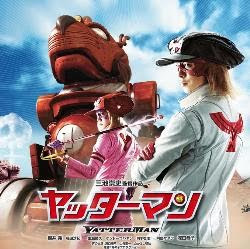 Yatterman (dir. Takashi Miike, 2009)—Yet another film extensively covered by Twitch, beginning with Logboy's initial announcement nearly three years ago; some early stills posted by Todd; Mack's announcements of the various actors attached to the project, including Sho Sakurai, Saki Fukuda, Kyoko Fukada, and Katsuhisa Namase / Kendo Kobayashi; a first look at Yatter-Bark, the quarter-million dollar robot dog; a gallery of Kyoko Fukada's Doronjo costumes; an announcement of the film's world premiere at New York's 2009 ComicCon; the Japanese theatrical trailer; and Simon Abrams' exclusive interview with Miike. Phew!! And all of that before anyone on the Twitch team had actually even seen the film!
The reviews finally started rolling in with guest reviewer Grady Hendrix from New York's ComicCon and Lauren Baggett from Fantasia 2009. Hendrix exuded: "The economy is on fire. Everyone in America is broke. Jobs are a rumor. The terrorists are winning. But I just saw Yatterman and I'm feeling groovy. A vaccination against The Dark Knight blues, a massive day-glo rail of cocaine that hits your brain like the Accela Express and kick starts your pleasure centers, this flick is far smarter than it has any right to be and it pops the pip all over your popple."
 "By now," Baggett added, "it goes without saying that Takashi Miike is one of the most successfully versatile directors out there. There is seemingly nothing that this man cannot do. If someone were to tell me that his next film was an intergalactic space ninja rock opera sung entirely in Esperanto, I would believe them and be right there in the front row on opening night. Some directors would self destruct in self-indulgence when given a huge budget. Takashi Miike just takes things to the next level, and how. In a way, he was the one and only choice when it came to adapting the classic anime Yatterman to the screen, and [I'm] glad that he's [behind] the wheel of this thrill ride. What results is a candy-colored confection that beats last year's Speed Racer at its own game. ...It's a love letter to anyone who ever eagerly looked forward to watching cartoons every Saturday at 6:30PM. And it's all told with a wink, a smile, and a cheesy victory pose."
Finally, Yatterman made Swarez's top 10 films of 2009. "Damn you Miike and your candy colored insanity," Swarez explained. "Probably the best anime adaption I've seen, completely off the wall with it's craziness and delightfully self aware as well. Miike manages to turn a cheesy one dimensional 70's cartoon character in to a dynamic but ultimately silly superhero forced to fight the same gang every week with the same results. If there ever was a film that could give you diabetes this would be it."
Cross-published on Twitch.
 Programmed within my favorite sidebar at the Palm Springs International Film Festival (PSIFF)—i.e., Awards Buzz: Best Foreign Language Film (which this year is featuring 40 of the 65 official submissions to the 2011 Academy Awards®)—Pablo Trapero's Carancho (2010) chases the shrill sound of ambulance sirens. I first caught this film at the 2010 Toronto International Film Festival (TIFF) and feel now is a good time to revisit those notes.
 "When he meets Luján [Martina Gusmán (Lion's Den)], an overworked medic who is wrestling with her own demons as she tries to save the lives of Sosa's 'clients,' he has a dramatic change of heart, but his plans to escape this life and change his ways go horribly awry. With crisp, tight editing, this lean and suspenseful thriller takes us through accident sites, hospital wards, and seedy interior settings that would be perfectly in place in a Hollywood noir. Carancho is the latest example of director Trapero's trademark socially realistic cinema."
 At Twitch, Todd Brown reported from the film's Cannes premiere: "A film that fuses stellar character work and intimate drama with larger thriller and heist moments with a few elements of shocking violence thrown in for good measure, Carancho is a masterful piece of work from writer / director / producer / editor Pablo Trapero. Trapero serves notice here that he is one of the very best film makers in the world today. Period. The complexity of his characters, the technical quality of the film work, his ability to balance intimate emotion with realistic and brutal action sequences, his obvious skill in working with actors—though that is made easier when you have actors the caliber of [Ricardo] Darín to work with—Trapero is at the highest level in all of these. Flawless? Carancho comes pretty damn close." As if to cinch the deal, Brown has included Carancho in his year-end top picks, emphasizing that "Ricardo Darín anchors Pablo Trapero's Carancho with a riveting, complex performance as a broken man slowly unraveling thanks to the tiny moré of conscience he retains. Classic noir in content if not in style, Trapero's film spins its amoral tale of insurance scams and ambulance chasing in as unaffected a style as possible, letting events play out in a cold, almost clinical fashion as his characters stumble inevitably to a bad end. The always stellar Darín has never been better and he's perfectly matched to both director and story."
 At MUBI, Daniel Kasman praises Trapero as a steady, sure-handed genre craftsman. Kasman reported from TIFF: "Carancho has the solidity of construction and reliance on conventional character types and story arcs to effectively normalize a highly specific and localized setting. The result, like an early '30s Hollywood entry, is a workman film, one made by a director prodigious enough to pick such a unglamorous setting and proceed to cast it in a reliably realistic and unappealing light—'cause that's the way it really is. ...The film is so solid that any room for ambiguity is left out of the digital masonry of the mise-en-scène, which builds a clear schema where, simply, anyone involved in the nocturnal world of deaths and near-deaths, accidents and 'incidents' is implicated in the gloom, no questions asked. Thus the modest ambitions of a genre film stay within its modest limits, rather than escaping into the unease of the shadows, blossoming within gray shades of morality, or aesthetically expanded in risky angles, lighting, and other stylistics."


