 "No man knows what he will do when driven by hunger." Falsely attributed to Alexander Pearce—so called "cannibal convict" of Tasmania and subject of his own 2008 DTV shocker Dying Breed—this epigram could easily have been spoken of devoted fans of Another Hole In The Head ("Holehead"), San Francisco's annual indie horror / sci-fi / fantasy feast. Genre fans, driven, insatiable, and hungry for gore, consume any and all offerings shoveled their way—a casualty of their insatiable hunger being that, like the cannibal convict, they seldom remember the name of their last meal.
 Doubtless the most complete film at HoleHead this year was Mike Flanagan's dread-centric character drama Absentia, singled out for a Variety review by prolific SF critic Dennis Harvey (serving a much–needed role as the festival's unofficial cheerleader this year). Callie, an ex-addict in recovery from an unspecified drug, comes to visit her sister Tricia at her Glendale home, where she is preparing to finally declare her husband Daniel "dead in absentia" a long seven years after his disappearance. In Daniel's absence, Tricia's life has moved on, her bills have piled up, and she's become involved with the local detective charged with upkeep on her husband's case. What appears to be largely a clerical matter turns out to be much graver when Daniel begins to appear in horrifying visions and finally re-emerges in the real world, shocked into near-catatonia by his ordeal.
As details emerge we learn that Daniel has been kept by a creature in a world "underneath" our world, released not as a response to Tricia's declaration but as a consequence of a trade accidentally initiated by Callie at the mouth of the pedestrian underpass in which "it" resides. In the course of uncovering the history of the creature, Flanagan can't help but include a few trite shots of aging police reports and newspaper articles and a brief rant about the bible and the existence of other dimensions, but he quickly course corrects, and smartly wraps these in favor of a well-acted (and dismayingly believable) character drama.
What differentiates Absentia from similar fare, apart from its low incidence of creature effects, is that it dares to dwell on the way real humans rationalize the supernatural—not by begrudgingly admitting its existence, but by rationalizing it as the most farfetched of a number of much more plausible possibilities. Ultimately, Absentia declares, there is no way we can ever assent to the truth of the supernatural, as admitting its existence would draw us into it—as it does Callie—and ultimately destroying our connection to reality. It's a complex idea, but not necessarily one that guarantees traction with the crowd who enjoy the genre for its more hoary, gory conventions. Absentia sits comfortably between character driven sci-fi like Donnie Darko and the more abstract, earthbound horrors of Japanese director Kiyoshi Kurosawa (Cure, Doppelganger). Taken together with his intriguing, one-bright-room horror short Oculus, Flanagan is emerging as a promising genre director with a unique vision of horror.
Having been introduced to both Borowczyk's The Beast and John Boorman's Zardoz at HoleHead back in 2006, I anticipated the unearthing of at least one minor classic in 2011. The fest befuddled my expectations, screening The Book, a no-budget sci-fi puzzler appearing to be a cult discovery from the genre's boom times in the 70s, but actually completed only last year. The plot of The Book is a bit of an artifact in itself: seeking to spread their influence through a forged manuscript, aliens kidnap and replace a prominent author and his family. It's simple, but spacious enough to accommodate depthy (and faux-depthy) interior monologues about the nature of writing, fame, and the nature of being human—all added, according to its director, "Ø", after the filming was complete.
Somehow appearing to pre-date its influences, The Book toasts the classics. In grand outdoor post-apocalyptic scenes, it glimpses Fellini's Satyricon, its denouement echoes the home invasion scenes of A Clockwork Orange (perhaps due in part to its cast of professional stage actors), Fassbinder's recently screened World On A Wire and a hundred others twinkle in its dated and glamorous futurism. The sets and effects are kitsch and charming—an apartment festooned with colored cellophane and tinfoil, baffling food stolen from the tables of Terry Gilliam's Brazil, and re-contextualized local color, most notably Frank Lloyd Wright's turquoise biomorph, the Marin Civic Center. The Book is goofy and endearing, but not quite dopey or camp enough to carry instant cult potential, which is a shame, as it's as enjoyable as anything in Ed Wood's canon, a bit more meaningful and much more intelligent.
 Though not as strong as The Book, HoleHead deserves recognition for its broad selection of SF entries this year, the best of which was Red Ice, which manages to be very smart and very San Francisco, and by this I mean that it features a transsexual succubus, a crack-smoking flautist, and a campily sycophantic Asian demon-monger. The Craving echoes its SF setting similarly, toasting local foodie culture with the tale of a lesbian chef with a discerning palate for human flesh. Apocrypha, recasting the now-weathered vampire narrative as a personality conflict heavy with SF locales and refs and Breath of Hate, buoyed the savage charisma of longtime character-villain Ezra Buzzington and bizarrely watchable Jason Mewes, both perform well but fall outside the mark.
Cross-published on Twitch.
 The critical reception to Srđjan Spasojević's A Serbian Film (2009) [official site] has been characterized by qualified reviews that remind me of the classic depiction of the Buddha in his "fear-dispelling" (abhaya) and "boon-bestowing" (varada) mudrās, which is to say the knowledge (i.e., experience) that this film imparts is offered only by way of overcoming aversion to—or more simply put, withstanding—the perverse violence it depicts. Whether critics or audiences are up to that onerous task remains to be seen.
By "qualified reviews", I offer these examples: At Fearnet.com Scott Weinberg writes: "I think the film is tragic, sickening, disturbing, twisted, absurd, infuriated, and actually quite intelligent. There are those who will be unable (or unwilling) to decipher even the most basic of 'messages' buried within A Serbian Film, but I believe it's one of the most legitimately fascinating films I've ever seen. I admire and detest it at the same time. And I will never watch it again. Ever."
 At The Temple of Ghoul, Dejan Ognjanović asserts: "A Serbian Film is the most shocking film you're likely to see this year—or any year soon. And the most shocking thing about it is how well made, well acted and poignant it is."
At Twitch, Todd Brown concurs: "A Serbian Film is one of the most incredibly raw and transgressive films I have ever seen. This is a film that left me feeling dirty and assaulted, a film that will surely spark protest and deservedly so. A film that contains a flurry of genuinely shocking imagery sure to spark genuine horror and revulsion from its audience. Spasojević is always going to be the man responsible for that film.
 "There is, however, another part of [me] that feels an overwhelming admiration for Spasojević and what he has done here. A Serbian Film is one of the most assured and technically accomplished debut films I have come across in some time. More importantly, as raw as the imagery may be it is never without a point. As extreme as it gets this is no mere exploitation film. No, this is a satire as sharp and pointed and genuinely shocking as was Jonathan Swift's A Modest Proposal when it first appeared on the scene suggesting that the poor sell their children as food. A Serbian Film is an astoundingly bold piece of work, one that will not just trigger a firestorm of criticism—any fool with bad taste can do that—but one that also has the substance and purpose to withstand it. And Spasojević is always going to be the man responsible for that film."
 By contrast, Alison Willmore's purposely spoiler-laden review at IFC protests that "while Serbian Film absolutely has aspirations beyond exploitation, they feel applied after the fact. Most of the graphic sequences, which are grouped near the end, don't come across as specific to the commentary on the Serbian national mindset toward which the film makes occasional gestures. They're more like live-action recreations of guro's greatest hits" [NSFW link!] and she concludes: "Movies can use transgressive topics and imagery toward great artistic resonance.... They can also just use them for pure shock/novelty/boundary-pushing, which is where I'd group Serbian Film. That it comes from a country that's spent decades deep in violent conflict, civil unrest, corruption and ethnic tensions makes it tempting to read more into the film than I think it actually offers—ultimately, it has as much to say about its country of origin as Hostel does about America, which is a little, but nothing on the scale its title suggests."
 As reported by Eric Kohn to the Wall Street Journal, Spasojević was quick to jump to his own defense, explaining to his stunned Alamo Drafthouse audience at the film's SXSW premiere that A Serbian Film is framed as an angry reaction to the country's rampant censorship laws. "This is a diary of our own molestation by the Serbian government," he said. "We’re giving this back to you." As of its SXSW screening, A Serbian Film had not yet been seen in Serbia though—according to the film's website—it recently premiered there in mid-June. "In the past 10 to 15 years," Spasojević explained, "the only films made in Serbia have no connection to Serbian reality." This is suggested straight off in the film's opening title credits where a deceptively charming title replete with ethnic accordion music is interrupted and slammed with a violent substitution. According to Spasojević, A Serbian Film is "about the monolithic power of leaders who hypnotize you to do things you don't want to do. You have to feel the violence to know what it's about."
 In perhaps the least qualified review of the bunch, Harry Knowles at Ain't It Cool News deems the film "brilliant" and "handsome" and predicts: "I would fully expect this film to be shortened by a minute or two for domestic distribution. I completely get this situation because in its current state, there are a handful of theaters in the United States that would have the chutzpah to show the film that was shown at Midnight at the Alamo Drafthouse South in Austin. That's not a false praise, it is a reality. This is a film that when the prints were made … twice, the film developer burned those prints because they didn't understand what they were looking at. This is a film that without breaking any major rules … seems to, but again if you take a very reasoned look at what you are seeing at any given moment, you realize what you are not seeing onscreen at the same time."
 All the more reason to honor the bravery of Holehead's programmers George Kaskanlian and Eric Ringer and their Roxie Film Center venue for allowing San Franciscan audiences to experience the film on its own merits and on their own terms. At least a handful, I know—myself included—felt A Serbian Film worthy to view twice, irrespective of Scott Weinberg's qualifications. I don't know if we benefited from the advance ballyhoo but the Roxie audience cheered on this masterpiece of depravity. If—as mythologist Joseph Campbell has suggested—the transgressive is part and parcel of the heroic, Srđjan Spasojević's A Serbian Film heroically wrestles with the visceral power of the projected image, raising the serious specters of prurience, voyeurism, and the staged distance of horror as entertainment, which—in many ways—comes off morally bankrupt by comparison to the raw and honest engagement presented in Spasojević's accomplished debut. I'm reminded of the philosophy behind Antonin Artaud's Theatre of Cruelty. I'm reminded of Max Renn's conflicted fascination in David Cronenberg's Videodrome. I was kept on edge by Wikluh Sky's droning industrial score punctuated by singular notes struck on a triangle that felt like a ball peen hammer was striking my nerves directly. I was fully riveted by the powerhouse performances of Srđan Todorović as A Serbian Film's unwitting protagonist Miloš and Sergej Trifunović as its maniacal antagonist Vukmir. And I was reminded most of all of the Buddha in his "fear-dispelling" and "boon-bestowing" mudrā, aware that somewhere inbetween these attitudes, fear itself becomes the gift.
Cross-published on Twitch.
 Distribution possibilities don’t allow me to give an outright review, but I thoroughly enjoyed this successful overview of the American horror film. Visually, Andrew Monument's Nightmares in Red, White and Blue (2009) [official site] resembles one of those TV docs that pop up around Halloween time, counting down the scariest moments of what-have-you, but while those programs want only to be top ten lists of memorable movies, Nightmares takes it a step further by contextualizing those successful scares. More than any other film genre, horror is an industry that has grown along with its viewers, adapting to what makes its audiences afraid—World Wars, genocide, government paranoia, etc. Even trashy film can be a wonderful chronicler of the human experience, directly or indirectly, because it will always be a product of the times in which it was made. With talking heads from horror bigshots like John Carpenter, Wes Craven, and George Romero and narrated by Lance Henriksen, I have to say: I took a class on the horror film in college and Nightmares is very much a condensed but equally insightful version of that information, for thousands of dollars less in tuition.
Cross-published on Ornery-Crosby and Twitch.
 Future X-Cops (Mei loi ging chaat, 2010) is a paint-by-numbers, sci-fi action flick that's doing gangbusters in China but is unlikely to make it past the bargain bin here in the US. The reason for its success abroad is simple: Andy Lau is one of the world’s biggest superstars. They used to call him the "Chinese Tom Cruise," but I think Lau's publicists would prefer to steer clear of that comparison these days. Still, it's hard not to compare the relative slump the two stars find themselves experiencing in 2010, with Cruise's Knight and Day pulling in the smallest opening weekend in 15 years for the one-time sure thing, and Lau slumming it in Future X-Cops. A possible thread regarding Lau's intentions here leads to his relationship with director Jing Wong, who coincidentally directed a film called Future Cops with Lau back in 1993. That film was a Street Fighter parody with no relation to Future X-Cops, but the possibility remains that this is a case of old friends scratching backs. It better be because, contrary to what X-Cops would indicate, Lau is not usually this bad an actor.
Here are the numbers Lau and Wong paint in Future X-Cops: In the year 2080 the world has been saved from an energy crisis by a scientist who has invented a giant shield that envelopes the earth and soaks up solar rays. The loss is so devastating for the energy companies that they create a team of cyborgs to assassinate the scientist by going back in time to 2020 and stopping him from ever inventing the solar shield. Super-cop Kidd Zhao (Lau) travels back as well, to protect the young scientist and to seek revenge for the loss of his own wife.
 It's a simple set-up and, although it bars the film from bringing anything terribly original to the plate, it could still be a good time. After all, I cannot count on ten hands the number of horror films that tread familiar ground and still emerge as pieces of relevant cinema. But X-Cops unfolds as you would expect, with some broad humor and a misty-eyed love story, hoping to cover all the bases. As a sci-fi fan, the film's worst insult is that it relies on visual effects and I've seen better CGI in pictures 10-years-old, including a few Asylum pictures(!). I considered enjoying X-Cops on the level of camp but found myself incapable of submitting to an experience that never decides whether it wants to be funny, thrilling or romantic. A somewhat novel scene at an amusement park did cause a smile, and bad guy Kalon is played seriously by Siu-Wong Fan of Ip Man (2008) and Riki-Oh (1993) but he's not really on screen enough to chew any of the cheap-looking scenery.
If you're a Lau or STV Chinese-action-flicks fan, you're likely steeled for a film like Future X-Cops already. Anyone else is looking for action in all the wrong places.
Cross-published on Ornery-Crosby and Twitch.
 I wonder how often filmmakers work backwards from a good title, as director Júlíus Kemp has admitted to doing with Reykjavik Whale Watching Massacre (2009). The film itself seems to work its way backwards as well, opening threateningly with real whale-hunting footage and a gritty look, but perhaps sensing its slim chances of living up to the similarly titled Texas Chainsaw Massacre (1974), Reykjavik drops the grit about a half hour in to focus on black comedy. It's a smart move, and the film is often darkly funny, I only wish the filmmakers had gone back and reworked the whole thing because I can see a lot of viewers shutting it off before they get to the good stuff.
 After the whaling footage we are introduced to an international cast of harpoon fodder—a rich Japanese couple, a drunk Frenchman and a few other forgettables—and everyone speaks in their native language or terribly stilted English. The realities of working with such a diverse cast make the "getting to know you" phase of Reykjavik feel like everyone is playing charades. It's hard to spot those often clearly-defined heroes or villains—well maybe you can pick out the villains. Initially, it's hard not to compare Reykjavik to Texas Chainsaw, no matter how dissimilar they wind up being. The villainous family are whale fishermen down on their luck, similiar to Texas' family of slaughterhouse workers, and they come to the faux rescue of the whale watchers after a violent accident. Then there's the casting of Gunnar Hansen as captain of the troubled boat. Having played the chainsaw-wielding Leatherface in the original 1974 Massacre, Hansen is a well-known name to horror fans and a big reason Reykjavik is getting so much play at horror-themed festivals like Holehead.
 Once you get to the actual massacre, Reykjavik drops the pretenses of plot and becomes kind of fun. It still feels like it was written in one sitting, but now those numerous narrative inconsistencies bring big dumb applause. It can be hard to tell how much is meant to be taken as comedy, but at some point I decided I was going to have a good time with it and that was not hard to do. The harpoon I mentioned earlier is particularly enjoyable, the violence fairly brutal and the character reversals completely off-the-wall. It never makes any real sense, but in its own way Reykjavik Whale Watching Massacre is better than most STV horror. Still, I imagine its best days will be on the festival circuit. Watching with a crowd of like-minded fans, all of them playing spot the reference, is the kind of mindless experience that we go to these festivals for.
Look at that, I went the whole review without a single Eyjafjallajökull joke.
Cross-published on Ornery-Crosby and Twitch.
 I always assumed that kappa meant cucumber in Japanese, leaping to the conclusion as a result of an immodest consumption of kappa sushi rolls over the course of my life. I now know that kappa are green goblins that live in Japanese ponds, and who specialize in swimming and sumo wrestling; it is because the kappa's favorite food is cucumbers that the sushi received its name. These gaijin-centric facts are revealed early on in Death Kappa (2010) by a self-identified Professor Tanaka who speaks directly to the camera, and including them for viewers indicates the producers' awareness of the appeal of low-budget Japanese filmmaking in the West. Thanks to the unexpected success of splatter hits Tokyo Gore Police (2008) and Machine Girl (2008), producers Yōko Hayama and Yoshinori Chiba are familiar with the tastes of Western audiences and the first half of Death Kappa, with its similar barrel-scraping budget and gleeful stupidity, is familiar ground.
The story goes that a young girl promises to protect the kind kappa who lives near her grandmother's house. The kappa is pretty gross looking, with a turtle shell on his back and hair in all the wrong places, but that's part of its charm. This particular kappa also loves terrible J-pop and dances around in the backyard before being suddenly ensconced by a team of renegade Japanese soldiers accompanied by a woman dressed like Female Convict: Scorpion who wheels her dead grandfather around in a wheelchair and who wants to use the kappa to create an army of "amphibious weaponized fishmen." To be honest, I don't understand half of what I'm talking about anymore, but I figure if you pay too much attention to the details of Death Kappa you're missing the point. I've made films and I can recognize a group of people just having a great time making movies.
 Around the halfway point, the film jarringly switches directions and becomes the kaiju film touted by the trailer. As fun as all the goofy evil-scientist stuff is, the kaiju portion is way more entertaining, with large sets full of miniatures and projections and attack planes with clearly-seen strings attached. The kappa, now huge-ified, must battle a monster whose name I didn't note but I'm pretty sure rhymes with Legolas, as the Japanese army attempts to stop them both. It's immensely silly to watch little remote-controlled tanks and death rays shoot pop-pops at a man in a rubber suit. You'll never catch me declaring Death Kappa a good film, but it never pretends to be. It's good for a laugh. Two laughs? Well, mileage will vary.
At 75 minutes, Death Kappa will be either just the right amount of fun or a real struggle, depending on how funny you find watching the big rubber suits crush plastic models. Boys will be boys, after all.
Cross-published on Ornery-Crosby and Twitch.
 Since compiling my last Twitch report on films slated for this year's edition of SF IndieFest's Another Hole in the Head (Holehead)—running July 8-29 at both the Roxie Film Center and VIZ Cinema—a few guest reviews have popped up in response to similar programming at the New York Asian Film Festival, administered through Twitch teammate Ben Umstead, and a couple of earlier reviews that I overlooked have surfaced as well.
 Death Kappa (dir. Tomoo Haraguchi, 2010)—Guest reviewer Mark Popham wanted more from this kaiju tribute than, he opines, it delivers. Deeming it "flat out awkward", I don't agree; but, hey, that just means more cucumbers for me! I'm going back to see it a second time when it screens at the VIZ and I'm taking friends. Crunch crunch. Mommy!
Mutant Girls Squad (dir. Noboru Iguchi, 2010)—Guest reviewer Alexander Thebez deftly synopsizes Iguchi's film, which—per his own admission—is familiar territory for fans of Tokyo Shock. He praises the breast swords and anal chainsaws as singularly noteworthy.
 Strigoi (dir. Faye Jackson, 2008)—I admit it, I had Roberto Rossellini on the brain searching for this film and punched in Strigoli. Of course, I came up with no results. Had I been a bit more careful, however, I would have found Kurt Halfyard's spot-on review. Kurt writes: "Where Trueblood and Twilight pander mightily to their audiences, offering lurid cheap thrills and plots that wash down like fizz-less soda pop, Strigoi challenges and stretches audience expectation of the bloodsucker with an ambitiously adult story of land ownership, tradition, history and a people dealing with a generational gap that has its youth go off to the rest of Europe to find their place in the world." He concludes: "Faye Jackson's slice of Romanian village life is both a handsome curio and a modern step forward from the stake that Let The Right One In drove into the heart of the genre last year."
Symbol (dir. Hitoshi Matsumoto, 2009)—Guest reviewer Joshua Chaplinsky joins the chorus of the amused and confused. He categorizes Symbol as "two parts Luis Buñuel, a dash of Takashi Miike, and a sprinkling of Kevin Smith (to taste)." Joshua adds: "Symbol can be great fun. There is a charm to its mixture of smart and stupid, and it possesses an element of daring sorely missing from Western cinema."
 Yatterman (dir. Takashi Miike, 2009)—I'll blame it on the Twitch search engine that I inadvertently overlooked Andrew Mack's earlier ebullient review of Yatterman from last Fall's Fantastic Fest, revived for its NYAFF appearance. Or perhaps I was just too dazzled by Grady Hendrix to look further? Either way, Mack asserts that Miike has taken the basic elements of the story and characters of a wacky '70s animated show and combined them together "with a dash of self awareness", candy coating "everything in an array of brilliant colors that won't melt in your hand but will melt in your heart. The sugar rush of goofiness and fun brims to the point of overflowing but Miike has never tasted so delicious and sweet." Considering the project "a resounding success", Mack found Yatterman far more entertaining than he ever thought it would be, with production elements far more impressive than he could have ever hoped.
Cross-published on Twitch.
 SF IndieFest's Another Hole in the Head (Holehead) always prefers that you have a good time over a good film. This year's line-up continues the gore and guffaws, and some of the films manage to be wholly original through sheer gumption and insanity. Titles like Mil Mascaras vs The Aztec Mummy and Ticked-Off Trannies With Knives seem to only encourage audiences to come to the showings drunk, and the programmers' obsessions with Miike and The Machine Girl bring the latest iterations of each, but for my money Holehead's best films might be the older ones on the bill: The Exterminator (1980), Lady Terminator (1988) and Metropolis 1984 Redux.
 The Exterminator—A classic of crap genre film, The Exterminator is a NY anomaly of gleeful macho-isms and vigilante justice in the wake of Death Wish (1974). Opening with a bang in the jungles of Vietnam before taking to the streets of The Big Apple, The Exterminator has some great scenes of slo-mo action and gore but struggles with a scattered narrative and pretty piss poor action hero—but those are both pros and cons for a film of this ilk. Robert Ginty as John "The Exterminator" Eastland has a droopy face and very little motive to do in a lot of the street punks he murders, but luckily there is only a single city cop on the case and he'll never catch Eastland because he keeps taking time off to go on dates. Made in 1980, The Exterminator still has that gritty '70s grindhouse look and feel, and it even takes a stab at an ending that reflects post-Vietnam paranoia. Doesn't work though.
 Lady Terminator—Killing two male fantasies with one stone, this Indonesian production beat its inspirators by 15 years in bringing a female Terminator to the screen. Mixing island fantasy with sci-fi, the female Terminator of the title is actually the reincarnation of The South Sea Queen, a demon who seduces men and then cuts off their you-know-whats. The differences barely matter though, and Lady Terminator does more than pay homage to the 1984 classic, fully recreating the eye gouge at the sink and the "Come with me if you want to live." With die-hard pacing, '80s fashion and Indonesian pop music, Lady is easily one of the better cheapo action flicks of the '80s, Indonesia or otherwise, and sports some great-terrible dubbing.
 Metropolis 1984 Redux—Yep, that Metropolis. Having really enjoyed the 1927 silent classic, disco-star Giorgio Moroder pulled some strings and re-cut his own version, tailor-made for 1984 audiences. The man behind Midnight Express' "Chase" theme and the mastermind of Donna Summer's best hits re-scored the film and added a bunch of crazy colors, but the core remains. In addition, Moroder re-imagined a lot of lost scenes from the original cut, but managed a product 40 minutes shorter by making most of the inter-titles subtitles. Is it blasphemy? Well, for the haughtier of film fans there can be no doubt, but Moroder's release did gain the film a new audience who would not have otherwise seen the film and his redux version has its own charms stemming from a time-capsule candy coating and terrible Freddie Mercury theme song. Sure, there were probably a bunch of kids who treated Metropolis 1984 Redux like a planetarium laser show, but let's not pretend we're above something as fun as a laser show.
Cross-published on Ornery Crosby and Twitch.
 When it comes to extreme cinema, where would I be without my cohorts at Twitch? The line-up for this year's edition of SF IndieFest's Another Hole in the Head (Holehead)—running July 8-29 at both the Roxie Film Center and VIZ Cinema—was announced at yesterday's press conference and I have a huge pile of screeners stacked on my coffee table, which I have yet to dive into; but, for starters, I thought I'd gather together what's already up on the Twitch site for ready reference.
 Alien vs. Ninja (dir. Seiji Chiba, 2010)—As reported by Charles Webb, Alien vs. Ninja had its world premiere last month at the 10th edition of the New York Asian Film Festival (with actor Masanori Mimoto in attendance) and follows through with its West Coast premiere at Holehead. NYAFF10's program capsule pulls no punches: "Like some kind of ultra-stupid, ultra-gory version of the Might Moronic Power Rangers, Alien vs. Ninja is the kind of boneheaded movie that does exactly what it says on the box. There are ninjas, and they fight an alien and by the end so many buckets of gore have been emptied, so many prop swords have been soaked in green alien gunk and so many copyright laws have been violated that the entire Dumb Movies Genre needs to go on vacation. The first title in Nikkatsu's Sushi Typhoon line of films, no other motion picture can offer you the cheap, rotgut thrills of this massive slab of cheddar."
 American Grindhouse (dir. Elijah Drenner, 2010)—Rodney Perkins reviewed this documentary when it screened earlier this year at South by Southwest 2010. His core complaint was that it lacked freshness since "[t]here are so many books, articles, and documentaries available on the subject of American exploitation cinema that new revelations are increasingly scarce and unlikely." He concluded that "beyond some cool interviews, there just isn't a lot of new information" in Drenner's project and: "As such, neophytes will find this to be a good introduction. Those familiar with the subject will find the American Grindhouse to be a nice trip down memory lane."
The Dead and the Damned (dir. Rene Perez, 2010)—Andrew Mack yawned his way through this one. I walked out of the press screening. Need I say more about this doomed world premiere?
 Death Kappa (dir. Tomoo Haraguchi, 2010)—I want my own adorable Death Kappa to sing Japanese pop songs to! I don't care if in his red-eyed fury he flails his arms around and destroys half of Tokyo; he's so cuuuuute! I'm not a men-in-monster-suits kind of guy; but, I have to admit that I thoroughly enjoyed this kaiju film's zany affection for everybody's favorite little turtle spirit, though he's not so little in Haraguchi's film. Todd first reported on this project last Summer and offered up Haraguchi's promo reel, which is sweet for showing the director walking around his miniature sets professing his commitment to analog effects. A couple of months back Todd followed through with the film's trailer and, as reported by Charles Webb, Death Kappa boasted its world premiere at NYAFF10. Holehead claims its West Coast premiere. I hope the Roxie Film Center's snack bar is stocked with cucumbers!
 Future X-Cops (dir. Jing Wong, 2010)—Twitch has been all over this one for months now, kicking off with X's ascription of Jing Wong as "Hong Kong's Maestro of Crap." If you're as impressionable as I am, the trailer will start you salivating. Andy Lau fighting cyborgs, robot snakes, flying cars? Need I say more? "It looks absolutely atrocious in all the right ways," Todd commented when offering up the newer more polished trailer. Al Young galleried a set of posters and lobbycards and followed through with an extended English-subtitled trailer. Despite James Marsh's lukewarm review, I plan on attending Holehead's West Coast premiere, which doubles as the fest's closing night extravaganza. C'mon, everybody, fight for a better future!
 Jimmy Tupper vs. The Goatman of Bowie (dir. Andrew Bowser, 2010)—Rodney Perkins announced this title when it screened in the Midnighters sidebar at South by Southwest 2010.
Lady Terminator (dir. Jalil Jackson, 1988)—As reported by Rodney Perkins, Jesse Hawthorne Ficks screened this rare "cinemapocalypse" film last year in association with Austin's Alamo Drafthouse as part of a quadruple program catering to his Midnites for Maniacs fans. Holehead is bringing it back to San Francisco in one of its five 35mm projections. Peter K. likewise wrote up this Indonesian sleazer when it screened at Toronto's Underground Cinema fest, hailing it as "one of the best worst movies ever made."
 Macabre (dirs. The Mo Brothers, 2009)—Here's another project that Twitch has had its eye on, initiated by Todd last Spring who introduced us to Indonesian filmmakers The Mo Brothers with a trailer and a quartet of teaser posters. Their first short Dara served as inspiration for Macabre. Stilettos and chainsaws, oh my! Todd followed through with a gallery of promotional stills and two new poster designs and—when the film showed up at Cannes—he opined: "Macabre will play like an equal blend of Audition and Saw, the Brothers succeeding wholeheartedly in their stated goal of fusing western and eastern horror styles." Todd reviewed the film more fully when it premiered at PiFan and Sitges. Though he found the film's narrative tropes familiar, Todd qualified that "when it comes to Indonesia's Macabre the execution is the thing—if you'll pardon the pun—and Macabre executes well and often, the film spiraling on the edge of control into a blood drenched fugue of death and dismemberment. It is a film so intensely blood soaked that its creators willingly concede that it will never be cleared by censors in its home country as it stands now."
 Mutant Girls Squad (dir. Noboru Iguchi, 2010)—Of course, any film having to do with Japanese girls and lots of blood will get the words to flow at Twitch. Todd started the cascade off announcing this omnibus project earlier this year, offering the first (albeit grainy) artwork, the first teaser trailer, a gallery of subsequent artwork, a gallery of small-scale chirashi / flyers, the full Japanese trailer, plus a "renegade splatter trailer." As reported by Charles Webb, Mutant Girls Squad saw its international premiere at NYAFF10 and its West Coast premiere at Holehead will serve as the fest's opening night kick-off.
 Phasma Ex Machina (dir. Matt Osterman, 2010)—Swarez first brought this film to the attention of the Twitch team, having spotted it at RowThree, noting that "at quick glance it sort of feels like a mix of Primer and The Sixth Sense with a wonderful pace and 'down to earth'-ness." He offered the trailer as proof. Swarez followed through and shared the film's impressive opening title sequence. Shortly before Christmas, Mack reported on the film's unique marketing strategy of offering a limited edition of hand-printed signed posters.
Reykjavik Whale Watching Massacre (dir. Julius Kemp, 2009)—Way back in 2007, Swarez likewise got the ball wryly rolling on Julius Kemp's Icelandic horror-comedy, starring Gunnar ("Leatherface") Hanson. Perhaps he got that early scoop because he's a confirmed Icelander? Todd followed through with the storyboards, the first teaser trailer, and the final trailer. Niels Matthijs reviewed the film for the site: "Kemp's film starts off pretty typical, but with each scene things get stranger and more awkward. There are some awesome twists, some true expectation killers and just as many elements to break through the typical clichés. RWWM doesn't go completely overboard, but its little edge gives the film such a spin that it is convincing enough to put it way above most other genre outings. Recommended stuff."
 Robogeisha (dir. Noboru Iguchi, 2009)—The trailer for Robogeisha has earned the honor of the most-watched trailer on Twitch's video player. With geisha this and geisha that, it's certainly covered the bases. Todd reviewed Robogeisha when it screened at Fantastic Fest in its "not-officially-a-world-premiere-for-contractual-reasons-but-first-time-it's-been-shown-anywhere-in-the-world screening" and found it to be "a violent, unrepentantly silly b-film loaded with wildly over the top set pieces hatched from the fevered mind of perpetual adolescent Iguchi." He adds that Robogeisha is "simultaneously a parody of bad melodrama and an explosion of cult excess", which "takes a (very) basic sisters-competing-for-affection storyline and lifts it out of the standard domestic setting and replaces it with extreme body modification and a clan of geisha-assassins." In his review, Charles Webb respected the film for being "willing to go nuts on its own terms—even when the final results are somewhat uneven."
 Samurai Princess (dir. Kengo Kaji, 2009)—Todd first took note of this film during his first day at the 2009 Hong Kong Filmart: "Japanese production CREI have quietly completed what they describe as 'erotic-grotesque action film' Samurai Princess, featuring a lifelike android woman with a host of built in weapons spreading carnage across the land. Yeah, these sorts of low budget grinders are a dime a dozen these days but this one is produced by effects man Yoshihiro Nishimura (Tokyo Gore Police) and boasts one seriously bloody, vintage Nishimura trailer." Mack likewise took notice of the film's poster and Todd followed through by posting the film's (timestamped) trailer. Todd caught the film at Sitges and reviewed it there. He found Nishimura's mutant creations "bizarre" and the effects "satisfyingly squishy." He cautions that—since Samurai Princess was shot on a much lower budget than, let's say, Tokyo Gore Police, Machine Girl or Robogeisha—the film "has a far more raw look to it. It was clearly shot on video without much thought ever given to possible theatrical screenings."
Satan Hates You (dir. James Felix McKenney, 2009)—Pointing to the trailer at the film's official site, Todd observes that this new project from producer Larry Fessenden features "a whole lot of old-school horror icons, Angus Scrimm and Reggie Bannister among them."
 A Serbian Film (dir. Srdjan Spasojevic, 2009)—As Srdjan Spasojevic's debut feature A Serbian Film geared up for its North American bow at SXSW earlier this year, Todd cautioned that it would put the controversial autoerotics of David Cronenberg's Crash to shame and added that because "Spasojevic's film has some brains to back up all the shocking imagery", this "only serves to make it all that much more appalling." The trailer only hints at the film's lurking depravity. In his subsequent review, Todd wrote: "There is a part of me that feels sorry for Srdjan Spasojevic. He has, you see, just created a debut film that will linger in infamy. No matter what lies in the future for Spasojevic he will always be the director of A Serbian Film and that may prove a difficult mantle to bear. A Serbian Film is one of the most incredibly raw and transgressive films I have ever seen. This is a film that left me feeling dirty and assaulted, a film that will surely spark protest and deservedly so. A film that contains a flurry of genuinely shocking imagery sure to spark genuine horror and revulsion from its audience. Spasojevic is always going to be the man responsible for that film." At Cannes, Todd reported on the film's effect on one fleeing victim. Holeheaders will get to feel dirty by this one in 35mm!
 Symbol (dir. Hitoshi Matsumoto, 2009)—I have absolutely no idea what Symbol symbolizes but found it amusing and engaging irregardless. When Symbol premiered at the 2009 Toronto International Film Festival, Todd described it as a "film that plays like a candy coated, Japanese game show version of a Franz Kafka short story." In his review, James Marsh praised Matsumoto's judicious use of comic timing and the "winning effect" of his blending the mundane with the surreal. When he caught Symbol at the Rotterdam International, Ard Vijn described it as "a delightful puzzle box of a movie with an intriguing first 75 minutes, followed by a mindblowing last 15..." He concluded: "The combination of highbrow concept and lowbrow humor is unique and odd, and many directors would stumble with it, but Matsumoto has created solid gold here." In his review, Niels Matthijs wrote: "Symbol is a rare film. Ultimately creative, laugh out loud funny and leaving you in a slightly bedazzled trance." Four reviewers at Twitch giving a film a thumbs up speaks volumes, even though none of them let on what this film might actually mean.
 Vampire Girl vs. Frankenstein Girl (dirs. Yoshihiro Nishimura & Naoyuki Tomomatsu, 2009)—Guest reviewer Dustin Chang caught the world premiere of Vampire Girl vs. Frankenstein Girl at NYAFF09, which he described as "a total gas and definitely a film to watch with a room full of rowdy gore aficionados. Limbs fly, blood bucket splatters, stereotypes confirmed." In his review from the Camera Japan Festival, Ard Vijn drew unexpected narrative resemblances between Vampire Girl vs. Frankenstein Girl and Let the Right One In and summarized that "strange as it sounds, all of the bluntly rude parody has a link with the storyline and by the end the various silly strands actually make a pretty coherent whole. Because of this, Vampire Girl vs. Frankenstein Girl may just be the cleverest and most enjoyable film from this studio yet." In his review from Fantastic Fest 2009, Swarez wrote: "The film is a hilarious take on teen soaps and is basically a romantic comedy at its core. The filmmakers set their sights on teen fads that are popular in Japan, emo wrist cutters, ganguro girls (the ones that want to resemble black people but here taken to a whole new extreme) and gothic dolls and tear them to shreds. All this is blended together in a diabolical mixer of guts and gore and resulting smoothie is pretty damn awesome." Finally, in his take on the film, Niels Matthijs complained goodnaturedly that it wouldn't surprise him to discover that the filmmakers "spent more time coming up with strange and fantastical creatures than they did coming up with a coherent storyline." But Niels understands that "there is no time for dull moments or dramatic depth, just heaps of blood, gore and silliness. And this time around, there's also plenty of room for comedy, which is a new twist compared to its predecessors."
 Violent Kind, The (dirs. The Butcher Brothers; 2010)—Bay Area filmmakers The Butcher Brothers stormed Sundance 2010 and Todd caught the film's first poster, some of the first stills (via Bloody Disgusting), and some video reels (via Cinematical). Guest reviewer Ryland Aldrich chimed in from Park City and advised: "The Violent Kind is the pinnacle of the WTF?! genre. Just when you think you might have the story figured out, the Butchers throw you a curve ball. ...This movie is about the spectacle; hot girls covered in blood, fist fights, and pure supernatural evil. Anyone who takes it too seriously is bound to be dissatisfied. Don't! Just enjoy the mayhem. This is one wild ride."
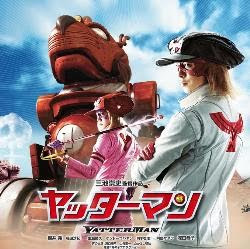 Yatterman (dir. Takashi Miike, 2009)—Yet another film extensively covered by Twitch, beginning with Logboy's initial announcement nearly three years ago; some early stills posted by Todd; Mack's announcements of the various actors attached to the project, including Sho Sakurai, Saki Fukuda, Kyoko Fukada, and Katsuhisa Namase / Kendo Kobayashi; a first look at Yatter-Bark, the quarter-million dollar robot dog; a gallery of Kyoko Fukada's Doronjo costumes; an announcement of the film's world premiere at New York's 2009 ComicCon; the Japanese theatrical trailer; and Simon Abrams' exclusive interview with Miike. Phew!! And all of that before anyone on the Twitch team had actually even seen the film!
The reviews finally started rolling in with guest reviewer Grady Hendrix from New York's ComicCon and Lauren Baggett from Fantasia 2009. Hendrix exuded: "The economy is on fire. Everyone in America is broke. Jobs are a rumor. The terrorists are winning. But I just saw Yatterman and I'm feeling groovy. A vaccination against The Dark Knight blues, a massive day-glo rail of cocaine that hits your brain like the Accela Express and kick starts your pleasure centers, this flick is far smarter than it has any right to be and it pops the pip all over your popple."
 "By now," Baggett added, "it goes without saying that Takashi Miike is one of the most successfully versatile directors out there. There is seemingly nothing that this man cannot do. If someone were to tell me that his next film was an intergalactic space ninja rock opera sung entirely in Esperanto, I would believe them and be right there in the front row on opening night. Some directors would self destruct in self-indulgence when given a huge budget. Takashi Miike just takes things to the next level, and how. In a way, he was the one and only choice when it came to adapting the classic anime Yatterman to the screen, and [I'm] glad that he's [behind] the wheel of this thrill ride. What results is a candy-colored confection that beats last year's Speed Racer at its own game. ...It's a love letter to anyone who ever eagerly looked forward to watching cartoons every Saturday at 6:30PM. And it's all told with a wink, a smile, and a cheesy victory pose."
Finally, Yatterman made Swarez's top 10 films of 2009. "Damn you Miike and your candy colored insanity," Swarez explained. "Probably the best anime adaption I've seen, completely off the wall with it's craziness and delightfully self aware as well. Miike manages to turn a cheesy one dimensional 70's cartoon character in to a dynamic but ultimately silly superhero forced to fight the same gang every week with the same results. If there ever was a film that could give you diabetes this would be it."
Cross-published on Twitch.
 "No man knows what he will do when driven by hunger." Falsely attributed to Alexander Pearce—so called "cannibal convict" of Tasmania and subject of his own 2008 DTV shocker Dying Breed—this epigram could easily have been spoken of devoted fans of Another Hole In The Head ("Holehead"), San Francisco's annual indie horror / sci-fi / fantasy feast. Genre fans, driven, insatiable, and hungry for gore, consume any and all offerings shoveled their way—a casualty of their insatiable hunger being that, like the cannibal convict, they seldom remember the name of their last meal.
 Doubtless the most complete film at HoleHead this year was Mike Flanagan's dread-centric character drama Absentia, singled out for a Variety review by prolific SF critic Dennis Harvey (serving a much–needed role as the festival's unofficial cheerleader this year). Callie, an ex-addict in recovery from an unspecified drug, comes to visit her sister Tricia at her Glendale home, where she is preparing to finally declare her husband Daniel "dead in absentia" a long seven years after his disappearance. In Daniel's absence, Tricia's life has moved on, her bills have piled up, and she's become involved with the local detective charged with upkeep on her husband's case. What appears to be largely a clerical matter turns out to be much graver when Daniel begins to appear in horrifying visions and finally re-emerges in the real world, shocked into near-catatonia by his ordeal.
 Though not as strong as The Book, HoleHead deserves recognition for its broad selection of SF entries this year, the best of which was Red Ice, which manages to be very smart and very San Francisco, and by this I mean that it features a transsexual succubus, a crack-smoking flautist, and a campily sycophantic Asian demon-monger. The Craving echoes its SF setting similarly, toasting local foodie culture with the tale of a lesbian chef with a discerning palate for human flesh. Apocrypha, recasting the now-weathered vampire narrative as a personality conflict heavy with SF locales and refs and Breath of Hate, buoyed the savage charisma of longtime character-villain Ezra Buzzington and bizarrely watchable Jason Mewes, both perform well but fall outside the mark.


